Every price a bookmaker shows you is doing two jobs at once: telling you how likely they think an outcome is and telling you what you’ll actually be paid if it happens. Most bettors glance at a number, decide it looks “good” or “bad” based on gut feeling, and move on. Learning how to read betting odds properly means you stop guessing at that judgment and start calculating it instead.

This guide covers every major betting odds format you’ll encounter, how to convert between them, how to pull an implied probability out of any price, and how that skill connects to everything else you’ll do as a bettor, from comparing sportsbooks to applying smart betting strategies more broadly. Whether you’re placing your first wager or you’ve been doing this for years, the fundamentals here don’t change even as the markets around them do.
Betting odds express two things at once: an implied probability and a potential payout. Learning how to convert any odds format into probability is the foundation of every other skill you need to make smarter betting decisions.
What Betting Odds Actually Represent
At their core, odds are the bookmaker’s opinion, expressed as a number, about how likely something is to happen, combined with how much they’ll pay you if you’re right. The two are locked together mathematically, so once you understand one format, converting to any other is just a different way of writing the same underlying information.
Two Numbers Hiding in One Price
A price of 2.00 isn’t just “even money”; it’s a specific claim that the bookmaker believes this outcome has roughly a 50 percent chance of happening. A price of 1.50 makes a much stronger claim, implying something closer to 67 percent. Once you know how to read betting odds this way, the whole market starts to look different, less like a menu of options and more like a set of claims you can agree or disagree with.
Decimal Odds Explained
Decimal odds are the simplest format to work with and the most widely used outside North America. A decimal price like 2.50 tells you your total return, stake included, for every unit you wager. Multiply your stake by the decimal number, and you have your full payout if the bet wins.
| Decimal Odds | £10 Stake Returns | Implied Probability |
|---|---|---|
| 1.50 | £15.00 | 66.7% |
| 2.00 | £20.00 | 50.0% |
| 3.00 | £30.00 | 33.3% |
| 5.00 | £50.00 | 20.0% |
This format’s biggest advantage is transparency. There’s no separate calculation for stake and profit; the number in front of you is the whole story. Our complete guide to decimal odds goes further into converting these prices and spotting value using this format specifically.
Fractional Odds Explained
Predominantly used in the UK and Ireland, fractional odds express pure profit relative to your stake rather than total return. A price of 5/1 means five units of profit for every one unit staked, on top of getting your original stake back.
| Fractional Odds | What It Means | £10 Stake Profit |
|---|---|---|
| 1/2 | Win 1 unit for every 2 staked | £5.00 |
| 2/1 | Win 2 units for every 1 staked | £20.00 |
| 5/1 | Win 5 units for every 1 staked | £50.00 |
The logic scales cleanly even with awkward-looking fractions like 7/4; you’re simply making seven units of profit for every four staked. Our dedicated guide to fractional odds breaks down how to convert these quickly without reaching for a calculator every time.
American Odds Explained
American odds work around the number 100 and use a plus or minus sign to show which side of that reference point you’re on. A negative number tells you how much you’d need to stake to profit 100 units, while a positive number tells you how much profit a 100-unit stake would return.
| American Odds | Meaning | £100 Stake Profit |
|---|---|---|
| -150 | Bet 150 to win 100 | £66.67 |
| +150 | Bet 100 to win 150 | £150.00 |
| -200 | Bet 200 to win 100 | £50.00 |
| +200 | Bet 100 to win 200 | £200.00 |
The minus sign always marks the favourite, and the plus sign always marks the underdog, which gives you an instant read on how the market views a matchup even before you calculate anything. Our full breakdown of American odds covers the format in more detail for anyone betting on US-facing sportsbooks.
Comparing Odds Formats Side by Side
Since all three formats describe the same underlying probability, it helps to see them lined up against each other rather than learning each one in isolation.
| Implied Probability | Decimal | Fractional | American |
|---|---|---|---|
| 25% | 4.00 | 3/1 | +300 |
| 33.3% | 3.00 | 2/1 | +200 |
| 50% | 2.00 | 1/1 | +100 |
| 66.7% | 1.50 | 1/2 | -200 |
None of these formats is objectively better than the others; they’re just different conventions for different regions. Being comfortable converting between all three means you can compare prices across international sportsbooks without ever feeling lost.
Odds Conventions Can Vary by Sport Too
Format isn’t purely a regional preference either. Horse racing markets, for instance, still lean heavily on fractional odds even on platforms that default to decimal everywhere else, simply because that’s the format the sport’s audience has always used. Combat sports and boxing markets, by contrast, tend to favour American odds even outside the US, since moneyline-style betting on a single winner maps naturally onto that format. Recognizing that a sport’s audience, not just its region, can shape which format you’ll encounter most often saves a moment of confusion the first time you switch from football to horse racing on the same platform.
Calculating Implied Probability From Any Odds Format
Every format above converts into a percentage using a slightly different formula, but the underlying question is always the same: what chance is this price actually claiming?
| Format | Formula |
|---|---|
| Decimal | (1 ÷ Decimal Odds) × 100 |
| Fractional | Denominator ÷ (Numerator + Denominator) × 100 |
| American (negative) | Odds ÷ (Odds + 100) × 100 |
| American (positive) | 100 ÷ (Odds + 100) × 100 |
This calculation is the single most useful skill covered in this entire guide, since it’s what lets you compare a bookmaker’s price against your own honest read of a match. Our full explanation of implied probability walks through worked examples across every format if you want to go deeper than the summary here.
Why the Numbers Never Quite Add Up to 100%
Add up the implied probability of every outcome in a market and the total almost always lands above 100 percent. That extra percentage, commonly called the vig or the overround, is the bookmaker’s built-in margin, and it exists in every single market regardless of format.
Understanding this margin changes how you read a price. A correct prediction can still be a losing long-term strategy if you’re consistently paying too much for it, which is exactly why price matters just as much as picking the right outcome.
A Worked Overround Example
Numbers make this far easier to trust than theory alone, so here’s how the same two-way market actually looks once you convert both prices into a percentage and add them together.
| Outcome | Decimal Odds | Implied Probability |
|---|---|---|
| Team A | 1.90 | 52.6% |
| Team B | 1.90 | 52.6% |
| Combined total | 105.2% |
That extra 5.2 percent isn’t a real reflection of either team’s chances; it’s the operator’s built-in cut spread across both sides of the market. Stripping it out to reach the true, fair probability is a habit worth building before you compare any price against your own estimate.
Removing the Overround to Find the Fair Price
Once you know the combined total, getting back to the fair, vig-free probability is a short calculation: divide each outcome’s implied probability by the combined total.
| Outcome | Calculation | Fair Probability |
|---|---|---|
| Team A | 52.6 ÷ 105.2 | 50% |
| Team B | 52.6 ÷ 105.2 | 50% |
That confirms what the raw 52.6 percent figures were hiding; this is genuinely a 50/50 market once the bookmaker’s margin is taken out of the picture. Skipping this step is exactly how bettors end up thinking they’ve found value when the price is really just clearing the operator’s cut and nothing more.
Using Odds to Find Value in the Market
Reading odds accurately is only useful once you start comparing that number against your own honest estimate of an outcome. When your estimate is meaningfully higher than what the price implies, you’ve found what’s usually called a value bet.
| Scenario | Bookmaker’s Implied Probability | Your Estimate | Verdict |
|---|---|---|---|
| Underdog | 30% | 38% | Value |
| Favourite | 65% | 60% | No value |
| Draw | 27% | 33% | Value |
Spotting the gap is only half the picture. Turning it into an actual number tells you exactly how much edge you’re working with, using the expected value formula.
Say a bookmaker prices a team at 2.50, which implies a 40 percent chance of winning. Your own model, based on genuine research rather than a hunch, puts their real chance at 50 percent.
(0.50 × 2.50) − 1 = +0.25
That works out to +25 percent expected value on this bet, a concrete number rather than a vague sense that the price “feels generous.” This is the calculation most beginner guides skip entirely, stopping at “value means the bookmaker underestimated the true chance” without ever showing what that gap is actually worth in practice.
This is really where odds literacy stops being an academic exercise and starts paying off. Our guide to identifying value bets covers the full framework for building this comparison into a repeatable habit rather than a one-off calculation.
How Different Bet Types Use the Same Odds Formats
Every format covered above applies just as directly whether you’re backing a straight winner, a point spread, or a totals market. What changes is what the price is actually describing, and the same handful of steps from how to bet on sports still apply once you get to picking the actual market.
| Bet Type | What the Price Represents |
|---|---|
| Moneyline / Match Winner | The straight probability of one side winning outright |
| Point Spread / Handicap | The probability of covering a specific margin, often priced close to even on both sides |
| Totals (Over/Under) | The probability of the combined score landing above or below a set number |
| Player Props | The probability of a specific individual outcome, often carrying a wider margin than main markets |
Spread and totals markets are frequently priced close to -110 in American odds on both sides, reflecting a roughly even split with the bookmaker’s margin baked in either way. Recognizing that the same implied probability maths applies regardless of which market you’re looking at makes it far easier to compare value across bet types rather than only within one.
How Odds Move: Reading Line Movement
A price you see the moment a market opens is rarely the same price you’ll see an hour before the event starts. Team news, injuries, weather, and the weight of public money all push prices around continuously, and learning to read that movement is a skill in its own right.
A sharp, sudden shift usually means genuine new information has entered the market, an injury update or a confirmed lineup change. A slow drift, by contrast, often just reflects which side the public is backing more heavily. Following current sports betting trends helps you separate these two situations rather than treating every price change as equally meaningful.
A Simple Example of Line Movement
Imagine a favourite opens at 1.80 the morning of a match. News breaks a few hours later that their most important player is a doubt for the game. By kickoff, the same team might be trading at 2.10, a meaningful drift that reflects genuinely new information rather than random noise. Spotting the difference between this kind of justified movement and a price simply drifting because of lopsided public betting is a skill that improves the more you compare lines across a handful of trusted betting platforms instead of watching just one.
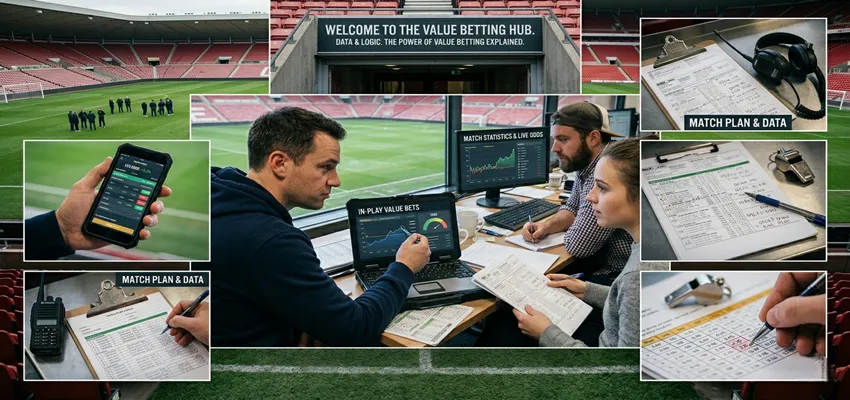
Reading Odds in Live and In-Play Markets
Everything covered so far applies just as directly once a match is already underway, only the pace changes dramatically. A goal, a card, or a substitution can shift a live price within seconds, and the same implied probability calculation still sits behind every one of those moves.
Our live betting strategies guide goes much deeper into reading these fast-moving prices specifically, including how to judge whether the market has genuinely overreacted to an in-game event or simply repriced correctly.

Odds Boosts and Enhanced Prices
Many betting sites promote a boosted price on a specific selection, usually a slightly higher number than the standard market would offer, to attract attention to a particular bet. These are still real prices with a genuine implied probability behind them, just a more generous one than usual, often on a single market with a capped maximum stake.
Treating a boosted price the same way you’d treat any other price, converting it to a percentage and comparing it against your own estimate, is the safest way to judge whether it’s genuinely worth taking or simply marketing dressed up as generosity.
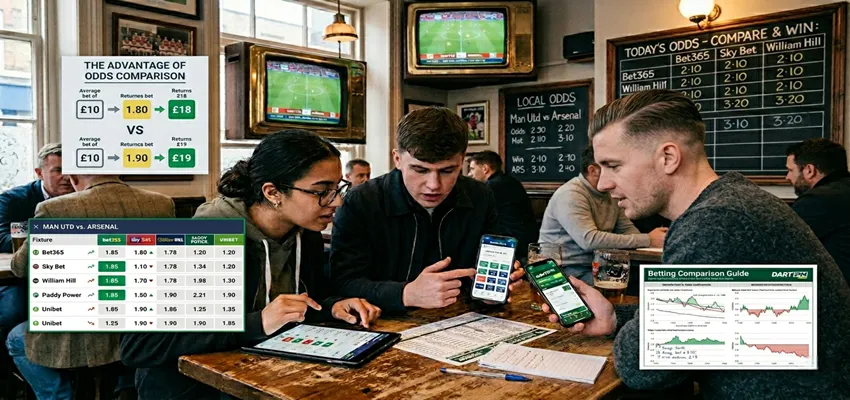
Comparing Odds Across Multiple Sportsbooks
Two operators rarely price the same event identically, and this gap is one of the quieter sources of long-term value in sports betting. A slightly better price on the same outcome, taken consistently across hundreds of bets, compounds into a meaningful difference in your overall return.
Checking our best betting sites guide before settling on where to place your money is worth doing with this comparison specifically in mind, since a platform’s odds competitiveness matters just as much as its licensing and security. Reading honest betting reviews helps confirm whether a book’s advertised odds actually hold up once you’re comparing several markets side by side, and checking reliable payment methods rounds out the picture, since a great price is worth less if withdrawing your winnings takes a week.
Why the Same Event Gets Priced Differently Everywhere
Each operator builds its own model, weighs public betting patterns differently, and sets its own margin. A sharper, more competitive book tends to run a tighter margin because it’s confident in its own pricing, while a book chasing casual bettors might price more generously on popular markets to attract volume, while padding the margin elsewhere. Neither approach is wrong, but knowing this variation exists is exactly why shopping a price across a shortlist of operators, rather than assuming your usual sportsbook is automatically competitive, tends to add up over a season of betting.
Common Mistakes When Reading Betting Odds
Most of the errors that cost bettors money have nothing to do with picking the wrong outcome and everything to do with misreading the price attached to it. A correct prediction at a poor price can still lose money over the long run, and a well-reasoned bet can still be a good decision even when it loses on the day, since price and outcome are judged on very different timescales. The three patterns below show up again and again, regardless of how experienced someone is or which sport they follow, and the same habits sit underneath nearly every one of the sports betting strategies covered on this site.
What makes these particular mistakes worth calling out is that they’re rarely about a lack of effort. Bettors who research team news carefully and track form diligently still fall into every one of them, simply because the habit of converting a price into a percentage, or checking a second format, or building a genuine foundation before layering on strategy, gets skipped in favour of moving faster. Slowing down at exactly these three points tends to remove more avoidable losses than almost any other single change worth making.
Treating a Short Price as a Safe Bet
A heavily favoured price still carries real risk, and treating it as close to guaranteed is one of the more common ways bettors lose money on selections that “should” win.
Ignoring the Format You’re Less Familiar With
Sticking exclusively to one odds format out of habit can hide better prices displayed in a format you haven’t bothered learning properly. Our breakdown of common betting mistakes covers this pattern alongside several others that quietly cost bettors money over time.
Skipping the Fundamentals Before Chasing Strategy
Trying to apply advanced staking or value-finding methods before you’re actually comfortable reading a price is a common shortcut that tends to backfire. Our guide to beginner betting strategy is worth working through first if odds conversion still takes you more than a few seconds to do in your head.
If you are unsure whether a price actually represents good value, convert the odds into a percentage first. Comparing implied probabilities with your own estimate is usually much clearer than comparing raw odds against each other.
Building Odds Literacy Into Your Overall Strategy
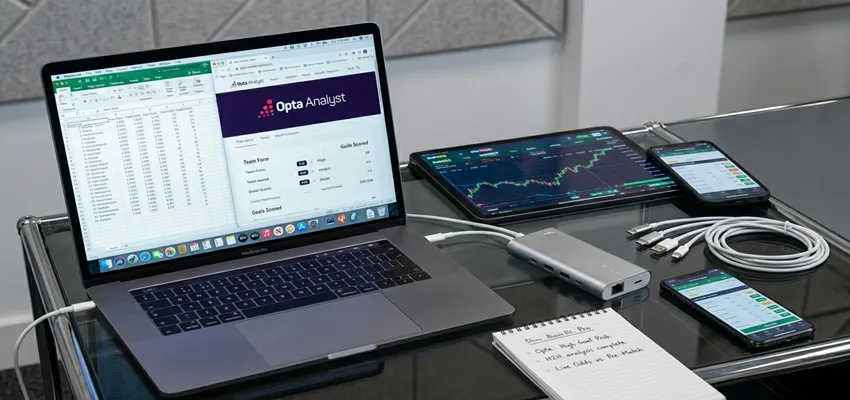
Knowing how to read betting odds accurately is the foundation everything else in sports betting sits on top of. It feeds directly into bankroll decisions, into spotting value, and into how you approach markets sport by sport. Getting comfortable with this early makes every later decision, from staking to spotting value, noticeably easier.

FAQs About Betting Odds
What are betting odds?
Betting odds are a number set by a bookmaker that expresses both the implied probability of an outcome and the payout you’ll receive if your prediction is correct.
What’s the difference between decimal, fractional, and American odds?
They’re three different formats for expressing the same underlying probability. Decimal shows your total return, fractional shows profit relative to stake, and American uses a plus or minus figure relative to 100 units.
How do I convert odds into a percentage?
Divide 1 by the decimal odds and multiply by 100. For fractional odds, divide the numerator by the sum of the numerator and denominator. For American odds, the formula depends on whether the number is positive or negative.
Why do bookmaker odds include a margin?
The margin, sometimes called the vig or overround, is built into every price to guarantee the bookmaker a profit regardless of the outcome. It’s why implied probabilities across a market usually add up to slightly more than 100 percent.
Which odds format is easiest for beginners?
Decimal odds are generally considered the simplest, since the number shown is your full return with no separate calculation required for profit versus stake.
Do odds change before an event starts?
Yes, prices shift continuously in response to team news, injuries, and betting activity. Checking a price again closer to kickoff rather than relying on an early number is a habit worth building.
What is implied probability?
It’s the percentage chance an outcome has of happening, based directly on the odds a bookmaker is offering, calculated by converting the price using the relevant formula for its format.
Should I only use one sportsbook?
No, comparing odds across a few trusted platforms consistently produces a better average price over time, since operators rarely price the same event identically.
Why does the same match have different odds on different sites?
Each operator builds its own pricing model and sets its own margin, so identical matches rarely carry identical prices. Comparing a shortlist of platforms before betting is one of the simplest ways to consistently secure a better price.
Making Betting Odds Work for You Long-Term
Betting odds aren’t a puzzle to be cracked once and forgotten; they’re a language you get faster at reading with practice. The bettors who improve fastest treat every price they see as a small calculation worth doing properly rather than a number to react to on instinct, and that habit compounds quietly across hundreds of decisions in a way no single bet ever will.
None of this requires memorising every formula perfectly from day one. Start with the format you’ll actually use most often, get comfortable converting it into a percentage without thinking too hard, and build outward from there into the other formats and the strategies that sit on top of them.
For those looking to deepen their understanding of probability and its applications more broadly, resources like Investopedia offer excellent background on the mathematical principles that govern chance.