Placing your first wager can feel more complicated than it needs to be, mostly because nobody explains the mechanics before pointing you toward the bet slip. Learning how to bet on sports is really just a matter of understanding a handful of sports betting basics, knowing how sports betting works, and following the steps in the right order.
This guide breaks down the entire process for anyone exploring how to bet on sports for beginners, from setting up an account to reading odds and placing a confirmed wager. It focuses on the practical side of betting rather than long-term strategy, which our sports betting strategy guide covers in far more depth.

By the end, you will understand how sports bets work behind the scenes, how odds translate into potential returns, and how to move from browsing markets to placing a bet you actually understand.
The exact markets on offer shift from one sport to another, but the process of getting there stays remarkably consistent. Once you understand how to bet on sports in one sport, applying that same process to a different one is mostly a matter of learning a few new terms. Whether you are completely new to betting or simply want a clearer explanation, this beginner-friendly guide walks through each stage step by step.
Sports betting for beginners becomes much easier once you focus on understanding the process instead of trying to memorize shortcuts. Start by getting comfortable with odds, betting markets, and the bet slip, as these basics make every other part of sports betting easier to understand.
What You Need Before Placing Your First Sports Bet
Getting started with how to bet on sports begins well before your first wager is placed, with a few practical steps worth handling first. Before placing your first wager, understanding how sports betting works gives you a clearer idea of what odds, markets, and settlements actually mean.
Before placing any wager, you need an account with a licensed and regulated betting platform. Regulation matters because it protects your deposited funds, ensures odds are calculated fairly, and gives you somewhere to turn if a dispute comes up later.
Signing up typically takes a few minutes and asks for basic details such as your name, date of birth, and email address. Most licensed operators also require identity verification before you can withdraw any winnings, usually a photo ID and sometimes a recent utility bill.
Once your account is verified, it is worth spending a few minutes browsing the sports and markets on offer before making a deposit. Coverage varies noticeably between platforms, and confirming your preferred sport is well covered saves confusion once you are ready to bet.
Funding your account usually takes just a couple of minutes, with most licensed platforms accepting debit cards, bank transfers, and various e-wallets. Minimum deposit amounts are typically small, often around 10 units of your local currency, which makes it easy to start with an amount you are genuinely comfortable risking while you learn the process.
Every licensed platform also enforces a minimum age requirement, almost always 18 or 21 depending on the region, and identity verification exists partly to confirm this. If a welcome offer or deposit bonus is presented during sign-up, our guide to welcome bonuses is worth checking before opting in, since the wagering requirements attached to it affect when and how any bonus funds can actually be withdrawn.
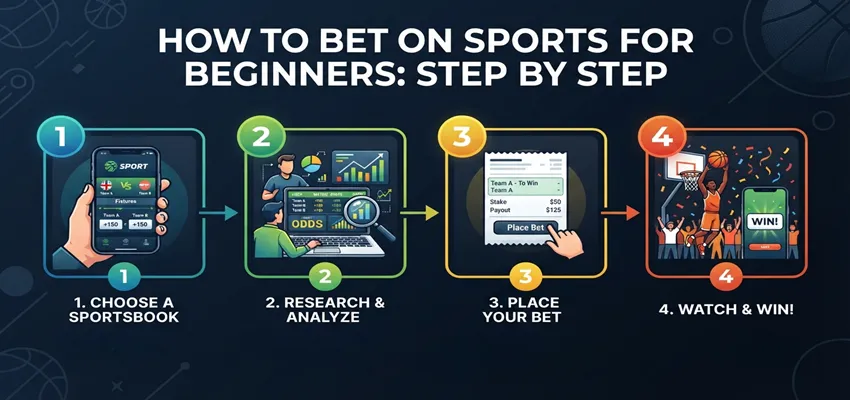
How to Bet on Sports for Beginners: Step by Step
The process of placing a bet follows roughly the same sequence regardless of the sport, platform, or bet type involved, and once you have done it once, how to make a sports bet stops feeling like a mystery. The list below covers a single, straightforward wager, though the same steps apply even if you later choose to combine several selections into one bet.
- Choose a sport. Pick the sport or league you already follow, since familiarity makes markets easier to interpret.
- Select a betting market. Decide what you are predicting, whether that is the match winner, total points, or a specific player outcome.
- Compare the odds. Check the odds attached to your selection and, ideally, compare them against another platform.
- Understand your selection. Confirm exactly what needs to happen for the bet to win before adding it to your slip.
- Add the bet to your slip. Clicking or tapping the odds moves your selection into the bet slip automatically.
- Choose your stake. Enter the amount you want to risk, and the slip will show your potential return instantly.
- Review and confirm. Check the selection, odds, and stake one final time before confirming the wager.
- Track the result. Once the event finishes, the bet settles automatically, and any winnings are added to your balance.
None of these steps are complicated on their own, but skipping the review stage is where most beginner mistakes happen, which is why it gets its own section later in this guide.
It is also worth knowing that a bet slip is rarely locked in until you actively confirm it. You can usually remove a selection, change your stake, or add another market without any penalty, right up until the moment you tap confirm.
How to Read Betting Odds Before Placing a Bet
Odds do two jobs at once. They show how likely an outcome is considered to be, and they determine how much a winning bet actually returns. Getting comfortable reading them is really the first practical skill in how to bet on sports with any confidence.
Decimal odds are the simplest format and the most common outside North America. A decimal of 2.50 means a 10-dollar bet returns 25 dollars in total, including your original stake.
Fractional odds, still common in the UK, express profit relative to your stake. Odds of 5/2 mean a 10-dollar bet profits 25 dollars, on top of getting your original stake back.
American odds use positive and negative numbers instead. A plus figure shows the profit on a 100-dollar stake, while a minus figure shows how much you need to stake to profit 100 dollars.
Seeing the same price across all three formats side by side often makes this click faster than any explanation. Odds of 2.50 decimal, 6/4 fractional, and +150 American are all describing the same probability and the same return, just written for different audiences in different parts of the world.
Odds are rarely fixed for long before an event starts. They shift as team news, injuries, and lineup announcements are confirmed closer to kickoff, which is one of the reasons the price you see when you first open a market may look slightly different by the time you actually place your bet.
On the bet slip itself, odds usually sit right next to your selection, with your potential return updating automatically the moment you enter a stake. Getting used to reading this number before you add anything to your slip is one of the simplest habits a beginner can build.
Working out how to calculate sports betting odds as an implied probability is simpler than it looks once you have done it a couple of times, and it helps make sense of what a specific price is actually telling you before you confirm anything. Our complete breakdown of betting odds walks through the maths with more worked examples if you want to go deeper.
You may also come across odds boosts or enhanced prices on certain markets, usually promoted clearly on the platform itself. These are simply a higher-than-usual price on a specific selection, and they work the same way as standard odds once applied, just with better returns on that particular bet.
| Format | Example | How to Read It | Common Region |
|---|---|---|---|
| Decimal | 2.50 | Stake x odds = total return | Europe, Australia, Canada |
| Fractional | 5/2 | Profit relative to stake | United Kingdom, Ireland |
| American | +150 / -200 | Profit per 100 staked, or stake needed to profit 100 | United States |
| Hong Kong | 1.50 | Shows potential profit per unit stake, excluding the original stake | Hong Kong, Asia |
| Malaysian | +0.50 / -0.50 | Positive odds show profit, while negative odds show the stake required to win one unit | Malaysia, Southeast Asia |
| Indonesian | +1.50 / -0.50 | Similar to Malaysian odds, showing potential profit or required stake depending on the sign | Indonesia, Asia |
Sports Betting Basics: Understanding Common Betting Markets
Once odds make sense, the next step is understanding the different markets you will actually see listed on a bet slip. This types of sports bets explained walkthrough focuses purely on what each market means and how it works, not on which one might be a better long-term choice, since that side of how to bet on sports belongs in a separate conversation about strategy.
| Format | Example | How to Read It | Common Region |
|---|---|---|---|
| Decimal | 2.50 | Stake × odds = total return | Europe, Australia, Canada |
| Fractional | 5/2 | Profit relative to stake | United Kingdom, Ireland |
| American | +150 / -200 | Profit per $100 staked, or stake needed to profit $100 | United States |
| Hong Kong | 1.50 | Shows the potential profit from a 1-unit stake, excluding the original stake | Hong Kong, Asian betting markets |
| Malaysian | +0.50 / -0.50 | Positive odds show potential profit, while negative odds show the stake required to win 1 unit | Malaysia, Southeast Asia |
| Indonesian | +1.50 / -0.75 | Similar to Malaysian odds, showing profit or required stake based on a 1-unit reference | Indonesia, Asian betting markets |
Beginners usually start with moneyline or over/under markets simply because they are the easiest to picture in your head. These are common starting points covered in most sports betting for beginners guides because they help new bettors understand the basics without adding unnecessary complexity.
A moneyline bet is the simplest market of all: you pick which side wins, with no margin or scoreline involved. It exists in almost every sport and is usually the first market a new bettor comes across.
Handicap betting adds a virtual head start or penalty to one side before the result counts, which is why it is common in sports where mismatches are frequent. A team given a minus handicap needs to win by more than that margin for the bet to succeed, while a team given a plus handicap can lose by less than that margin and the bet still wins.
Over/under betting, sometimes called totals, asks whether the combined statistic in a match, usually goals, points, or runs, will finish above or below a number set by the bookmaker. It removes the need to pick a winner at all, which some beginners find more approachable.
Prop bets and futures both look further into specifics or further into the future than a standard match bet. A prop might ask whether a named player scores, while a futures bet locks in a prediction for an outcome that will not be settled for weeks or months, such as a tournament winner.
Accumulators combine several selections into a single bet, where every leg needs to win for the whole thing to pay out. They can offer larger returns from a small stake, but a single incorrect leg means the entire bet loses, which is worth understanding clearly before combining more than two or three selections.
Live markets simply take any of the bet types above and make them available once the event has already started, with odds adjusting continuously as the action unfolds. The mechanics of placing the bet are identical to a pre-match wager; the only real difference is that you are reacting to something already in progress rather than something yet to begin.
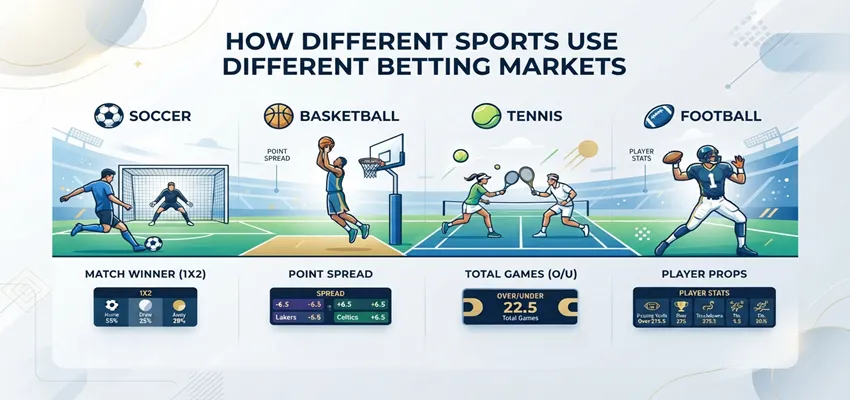
How Different Sports Use Different Betting Markets
The core process covered so far applies across every sport, but the specific markets on offer do shift depending on what you are betting on. The short overviews below point you toward a deeper breakdown for each sport, so you can apply the same process covered in this guide to how to bet on sports you may not have tried yet.
Even if you have only ever followed one sport closely, you already know more than you think. The account, the bet slip, and the confirmation step behind how to bet on sports do not change from one sport to another; only the specific markets and terminology sitting on top of them do.
How to Bet on Football
Football betting centers heavily on match winner, handicap, and total goals markets, alongside a wide range of player-specific props. Anyone wanting the finer points can check how to bet on football, which covers league-specific markets and terminology in more depth.
Because a draw is a genuine outcome in football, match winner markets usually offer three options rather than two. It is a good reminder that learning how to bet on sports means adjusting to small format differences like this one from one sport to the next.
How to Bet on Basketball
Basketball markets lean on point spreads and totals more than most sports, largely because scoring is frequent and games rarely end in a draw. The page on how to bet on basketball walks through spreads and quarter markets in more practical detail.
Quarter and half-time markets are especially popular in basketball, since the high-scoring pace makes shorter segments of a game genuinely predictable in their own right. It is a good example of how to bet on sports at a faster tempo than you might be used to.
How to Bet on Tennis
Tennis has no draw, which simplifies the match winner market, though set betting and game handicaps add extra layers once you look closer. Our page on how to bet on tennis breaks set and game markets down more clearly.
Because tennis matches are played in sets rather than one continuous scoreline, correct score and set betting markets exist alongside the standard match winner option, giving beginners a couple of different ways to approach the same match. This is part of learning how to bet on sports that unfold in sets rather than a single running score.
How to Bet on Cricket
Cricket betting spans formats from Twenty20 to Test matches, each with its own typical markets around run totals and top performers. Our breakdown of how to bet on cricket lays out how markets shift from one format to the next.
A Test match can end in a draw as well as a win or loss, adding a third outcome to the standard match winner market that does not exist in the shorter formats. It is a useful reminder that how to bet on sports correctly often depends on the specific format in front of you, not just the sport itself.
How to Bet on Rugby
Rugby markets frequently use handicaps because mismatches in ability are common, alongside totals and try scorer markets. The guide on how to bet on rugby explains how these markets work across union and league.
Try scorer markets work similarly to goal scorer markets in football, letting you back a specific player to cross the try line at any point during the match rather than picking the overall winner. It is one more example of how to bet on sports beyond the standard match winner market.
How to Bet on American Football
American football betting centers on moneyline, point spread, and total points markets, with player props layered on top for those who want to bet on individual performances rather than the final score. Our guide on how to bet on American football walks through how these markets work and how to read an NFL bet slip in more detail.
Because scoring in American football happens in bursts rather than continuously, the point spread often carries more weight here than the moneyline does in lower-scoring sports. It is a good example of how to bet on sports where one specific market, rather than a simple two-way outcome, ends up being the most heavily used option.
How to Bet on Esports
Esports markets often revolve around map handicaps and series winners rather than traditional totals, reflecting how competitive gaming actually scores. Our breakdown of how to bet on esports explains these formats title by title.
Match formats vary considerably between titles, and a best-of-one series carries very different risk to a best-of-five, which is worth checking before comparing odds across two different esports events. Format is one of the first things to check when working out how to bet on sports in esports specifically.
How to Bet on Horse Racing
Horse racing introduces each-way and place markets alongside the standard win market, both of which reward horses that finish competitively without necessarily winning. The primer on how to bet on horse racing unpacks how these terms work in practice.
An each-way bet is really two bets combined into one slip, with part of the stake on the horse to win and part on it to finish within the specified places, which is a distinction worth understanding before placing your first racing bet. It is a good example of how to bet on sports with more moving parts than a simple two-outcome market.
How to Bet on Ice Hockey
Ice hockey typically uses puck line betting in place of a standard point spread, reflecting how tight scoring margins usually are. The overview on how to bet on ice hockey explains puck lines and period markets in more detail.
Period betting lets you wager on a single period rather than the full game, which can be a useful entry point if you want to follow a shorter, self-contained market while you get comfortable with how to bet on sports at this pace.
How to Bet on Baseball
Baseball betting centers on the moneyline, run line, and totals, though extra innings, starting pitcher changes, and postponed games bring in a few settlement quirks that don’t really come up in other sports. For a closer look at how to bet on baseball, the markets and rules are worth walking through in more depth.
Because a baseball game has no fixed length, a tie after nine innings simply continues until someone wins, which can change how a bet settles depending on the market and the sportsbook. It’s a useful reminder that learning how to bet on sports sometimes means learning a sport’s own quirks first, not just its markets.
How to Bet on MMA
MMA carries the same fight winner and method of victory markets as boxing, but round totals split further into round groups, and fights can end by knockout, submission, or decision rather than just points. Anyone new to the sport can start with how to bet on MMA, which explains moneyline bets, method of victory, and round markets in plain terms.
A bout is scheduled for three rounds by default, but championship and main event fights run to five, which changes how a round total line should be read from one fight to the next. It is a useful reminder that how to bet on sports means checking a sport’s own format details before assuming the markets work the same way everywhere.
How to Bet on Formula 1
Formula 1 doesn’t really have a match winner in the way most sports on this page do. Twenty-two drivers start every Grand Prix, so betting on the outright winner works more like backing a horse in a large field than picking a side in a two-team match.
Race weekends run longer than a single event too. Practice and qualifying happen across Friday and Saturday, and on six weekends a year there’s a Sprint race thrown in before the Grand Prix itself on Sunday. If any of that sounds unfamiliar, there’s a full walkthrough on how to bet on Formula 1, starting with the race winner market.
How to Bet on Volleyball
Volleyball works a little differently from most sports on this page, since matches are decided by sets rather than a running clock and there’s no possibility of a draw. Markets like match winner, set handicap, and totals cover most of what shows up on a typical bet slip for this sport.
Anyone new to it can pick up the basics of those markets, how the odds work, and how a bet actually gets placed in how to bet on volleyball, which walks through everything needed before a first wager. It’s a good starting point before looking at any of the sport-specific strategy content elsewhere on the site.
How to Bet on Boxing
Boxing keeps the core decision down to two fighters, but it adds markets around method of victory and round totals that most other sports on this page skip entirely. Anyone new to the sport can start with how to bet on boxing, which explains fight winner bets, method of victory, and round markets in plain terms.
A fight can end early by stoppage rather than running its full scheduled distance, so total rounds and “to go the distance” bets sit alongside the standard fight winner market, letting you bet on how the fight plays out rather than simply who wins it. It’s a useful reminder that how to bet on sports sometimes means paying as much attention to the manner of a result as to the result itself.
How to Bet on Golf
Golf betting centers on outright winner and each-way markets rather than a simple match winner, since a single tournament can involve well over a hundred competitors. Our explainer on how to bet on golf covers each-way terms and market types in more depth.
Because so many players are still alive after the opening rounds, the cut plays a much bigger role in golf than a simple elimination format does in most other sports. It is a good reminder that learning how to bet on sports means adjusting to formats built around dozens of competitors rather than two opposing sides.
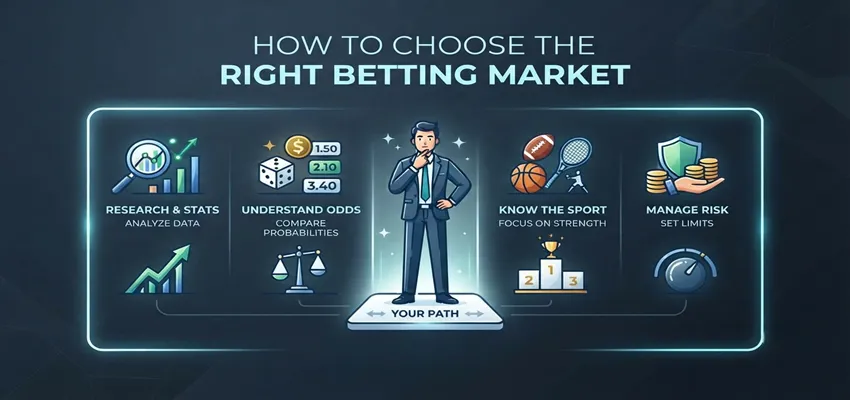
How to Choose the Right Betting Market
Knowing how to choose a betting market comes down to matching the market to how confident you actually feel about a specific outcome. A match winner market is broad and simple, while a player prop demands much more specific knowledge.
Match winner markets are the most beginner-friendly starting point because they only ask you to predict one outcome from two or three options. Team statistics markets, like total corners or total rebounds, require a bit more familiarity with how a sport is usually played.
Total points, goals, or runs markets sit somewhere in the middle, since they only require a sense of scoring pace rather than deep tactical knowledge. Starting with a market you can explain in one sentence is usually a good sign that it is the right one for a first bet.
Getting comfortable with how to bet on sports across different markets is really just a matter of repetition, since the market you choose shapes everything else that happens on your bet slip.
It also helps to know that markets can be suspended or removed entirely close to an event, particularly if there is late team news or unusual betting activity. This is a normal part of how sportsbooks manage risk, and it simply means that the market is temporarily or permanently unavailable rather than something being wrong with your account.
How to Place a Sports Bet Online
The practical side of placing a bet online follows the same pattern across nearly every platform, which is exactly what makes how to bet on sports easy to repeat once you have done it a few times. You select an event, choose a market, and your selection appears automatically in the bet slip.
From there, you can add further selections if you want to build an accumulator, though sticking to a single selection is usually easier while you are still learning. The bet slip will show your combined odds and potential return as you go.
Entering your stake updates the potential payout instantly, so you can adjust it before confirming anything. Always take a moment to check that the selection, odds, and stake are all correct before you confirm the wager.
Once confirmed, most platforms show a bet as accepted within seconds, though certain markets involving fast-moving news or heavy demand can occasionally be delayed or rejected if the odds change first.
The process is nearly identical whether you are using a desktop site or a mobile app, though the layout of the bet slip can differ slightly. On mobile, the slip usually appears as a small tab or icon that expands into a full-screen view once you have added a selection, which is worth getting familiar with before you are trying to bet quickly.
Every confirmed bet also appears in a bet history or open bets section of your account, which is the easiest place to check a wager’s status without waiting for a notification. Getting into the habit of checking this section after placing a bet is a simple way to confirm everything went through as expected. Of course, none of this matters much if you haven’t picked a solid platform to begin with. Our guide on finding a trustworthy bookmaker covers exactly what to look for before you register.
| Step | What To Check |
|---|---|
| Selection | Correct team, player, or outcome |
| Market | Matches what you intended to bet on |
| Odds | Current and acceptable to you |
| Stake | Amount you are comfortable risking |
| Confirmation | Bet shows as accepted, not pending |
Pre-Match Betting vs Live Betting
Pre-match betting means placing your wager before the event begins, with odds that are set in advance and generally move only gradually as team news comes in. This is the more straightforward starting point for anyone still learning how to bet on sports for the first time.
Live betting, sometimes called in-play betting, lets you place wagers after the event has already started, with odds updating continuously as the action unfolds. This is more dynamic, but also less forgiving if you are still getting comfortable with reading odds quickly.
Pre-match markets give you time to think, compare, and double-check your selection before confirming anything. Live markets reward speed and can shift within seconds, which is worth keeping in mind before diving into in-play betting as a beginner.
| Feature | Pre-Match Betting | Live Betting |
|---|---|---|
| Timing | Placed before kickoff | Placed during the event |
| Odds | Set in advance, move gradually | Update continuously in real time |
| Decision Time | Minutes or hours to decide | Seconds to react |
| Best Suited For | Careful comparison and planning | Bettors comfortable making quick decisions |
Many beginners start with a few pre-match bets to get comfortable with the bet slip and confirmation process, then introduce live betting once that basic process feels familiar. Pre-match betting’s main advantage is time, since you can compare markets and confirm a bet with a clear head, while live betting lets you react to something you are actually watching, though hesitating even briefly can mean the odds you saw are no longer available by the time you confirm.
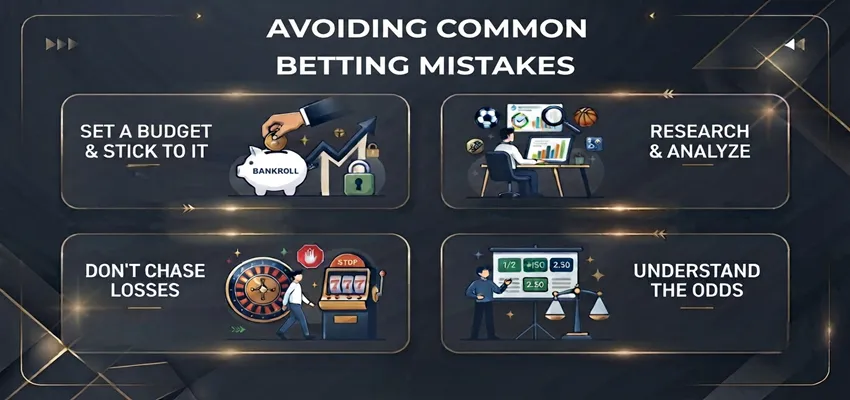
How Beginners Can Avoid Common Betting Mistakes
Most beginner mistakes in how to bet on sports happen during the process itself rather than because of a bad prediction. This is why sports betting for beginners should focus on understanding odds, markets, and bet slips before exploring advanced strategies.
Common Mistakes:
- Placing a bet without understanding what the odds actually mean
- Choosing an unfamiliar market just because the odds look appealing
- Skipping the terms attached to a bet, including cash out rules
- Betting on emotion after a bad result rather than a clear decision
- Confirming a bet slip without checking the selection first
Betting without understanding the odds is probably the most common mistake on this list, since it makes it impossible to judge whether a price is actually reasonable. Taking an extra thirty seconds to check what you are actually agreeing to prevents most avoidable errors.
Confirming a bet slip too quickly is a close second, especially on mobile, where a rushed tap can add the wrong selection or the wrong stake. Reviewing the slip before confirming takes only a few seconds and removes almost all of this risk.
Skipping the terms attached to a bet is another mistake that only becomes obvious after the fact, particularly around how cash out betting actually works or how a bet is settled if a match is postponed. A quick read of the terms before confirming a wager, especially an unfamiliar one, takes less time than it sounds and avoids some genuinely frustrating surprises later.
Rushing straight into another bet immediately after confirming one, without a quick check that the previous slip actually went through as intended, is another process mistake worth watching for. It skips the same review step that would normally catch an incorrect selection or an unintended stake before it becomes a bigger issue.
How to Win a Sports Bet: What Beginners Should Know
Understanding how to win a sports bet starts with accepting that no outcome is guaranteed. Making better decisions comes down to knowing how odds work, researching the market you are betting on, managing your stake properly, and avoiding emotional choices. For beginners, the biggest improvement usually comes from slowing down, learning the process, and making each bet with a clear reason behind it. Once you are comfortable with these fundamentals, our smart betting guide explains how to make more informed betting decisions and build better long-term habits.
Sports Betting Platforms and Mobile Betting
The platform you use has a real effect on how smooth the entire process feels, not just once you start betting seriously but from your very first wager. A cluttered website or a slow-loading bet slip can turn a simple bet into a frustrating one, regardless of how well you understand how to bet on sports in principle.
Licensing, odds coverage, and the range of markets available all vary between operators, so comparing a shortlist before committing to one is worth the extra ten minutes. Our comparison of licensed betting sites breaks down coverage and features across the leading platforms.
Payment options and withdrawal speed matter just as much as the betting experience itself, since a platform that is slow to pay out can undo an otherwise good experience. Reading independent reviews of betting platforms before signing up is one of the simplest ways to avoid a poor first impression.
Mobile apps have become the default way most people place bets, and a well-built app usually mirrors the desktop site closely while adding features like push notifications for settled bets. Security features such as two-factor authentication are worth checking too, particularly if you plan to deposit and withdraw regularly.
Customer support becomes especially relevant the first time something does not go as expected, whether that is a delayed withdrawal or a bet that settled differently than you anticipated. Live chat support with genuinely quick response times is one of the clearest signs of a platform that takes its customers seriously.
Language and currency options are worth a quick check too, particularly if you are betting from outside a platform’s primary market. A site that displays odds and balances in your local currency by default tends to make the whole process feel noticeably smoother from the very first bet.

FAQs About How to Bet on Sports
What is the easiest way to learn how to bet on sports?
The easiest way is to start with a single, simple market such as a moneyline bet on a sport you already follow. Understanding one bet type fully before moving to another prevents the confusion that usually comes from trying to learn everything at once.
How do sports bets work?
A sports bet involves predicting an outcome and placing money on that prediction with a bookmaker, who sets odds reflecting how likely each outcome is. If your prediction is correct, the bet settles as a win and pays out based on those odds.
How do I place my first sports bet?
Create an account with a licensed platform, verify your identity, and choose a simple market like a match winner bet. Add the selection to your bet slip, enter a small stake, and review everything before confirming. Once the bet is accepted, it will appear in your open bets or bet history section, where you can track it through to settlement.
How do I read betting odds?
Decimal odds show your total return per unit staked, fractional odds show profit relative to stake, and American odds use positive or negative numbers to show profit or required stake. All three describe the same underlying probability, just presented differently depending on the platform and region you are betting from.
What are the most common types of sports bets?
Moneyline, handicap, and over/under bets are the most common starting points for beginners. Prop bets, futures, and accumulators exist too, but they generally require more familiarity with a sport before they make sense to use, since each one asks you to predict something more specific than a straightforward match outcome.
Can beginners bet on sports successfully?
Beginners can absolutely place winning bets, though consistent long-term results depend on developing genuine knowledge over time rather than luck alone. No approach to betting guarantees profit, and any resource claiming otherwise should be treated with caution, especially early on when the process itself is still the main thing to learn.
How much money should beginners bet?
Most experienced bettors suggest starting with small stakes you are comfortable losing while you learn the process. The exact amount depends on your personal budget, but the goal early on is learning, not maximizing returns.
What is the safest way to start sports betting?
Choose a licensed, regulated platform, start with a market you understand, and keep your first stakes small while you get comfortable with the process. Reading the terms attached to a bet before confirming it is also a simple habit that prevents most early mistakes, as is checking the age and eligibility requirements for your specific region before signing up.
What is the difference between pre-match and live betting?
Pre-match betting locks in odds before an event begins, giving you time to compare and think. Live betting lets you wager after the event starts, with odds updating continuously as the action unfolds.
How do I choose a reliable betting site?
Look for a site licensed by a recognized regulatory body, clear market coverage for the sports you follow, and straightforward payment options. Our full guide to trusted betting platforms breaks down exactly what to check before signing up.
Final Thoughts on How to Bet on Sports
Understanding how to bet on sports really comes down to a handful of repeatable steps: choosing a market you understand, checking the odds in front of you, reviewing your bet slip carefully, and then placing the wager with a clear understanding of your selection. None of this requires special insight, but taking time to learn the process, compare markets, and understand your decisions can make the experience much easier for beginners.
Keeping betting as a form of entertainment, rather than something that needs to pay off, makes the whole experience far more enjoyable, and it is worth checking in with yourself occasionally to make sure it still feels that way.
If betting ever stops feeling like entertainment and starts feeling like pressure, free and confidential support is available through GamCare, an independent UK charity that runs the National Gambling Helpline.