A field of 150 players tees off on Thursday morning, and by Sunday afternoon exactly one of them lifts the trophy. That gap between the size of the field and the size of the reward is what makes learning how to bet on golf feel genuinely different from betting on a two-team match, and it’s exactly why golf carries its own set of markets, terms, and habits worth understanding before you place a single wager.

This guide walks through every major golf betting market, how each-way terms actually work and why they matter more here than in almost any other sport, what genuinely moves the odds from Thursday to Sunday, and how to build a repeatable approach rather than picking a favourite name and hoping for the best.
Golf betting revolves around large fields and long odds, which makes each-way betting the single most important concept to understand before wagering on an outright winner. Understanding place terms, course fit, and how form translates across different tournaments matters far more here than in most other sports.
The Main Ways to Bet on a Golf Tournament
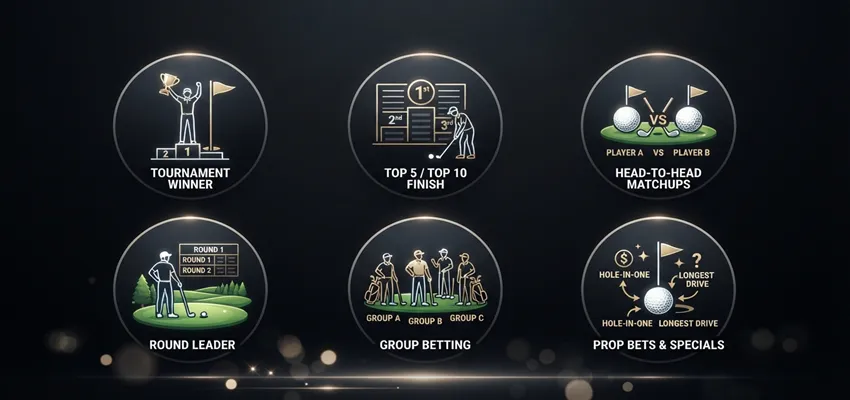
Golf offers a wider spread of market types than most sports, largely because a single tournament produces so many possible storylines across four rounds and well over a hundred competitors. Knowing how to bet on golf properly starts with understanding what each of these markets actually asks you to predict.
If you’re still finding your feet with account setup and placing a bet in the first place, our step-by-step guide to sports betting covers that groundwork before you dive into a sport this specific.
Outright Tournament Winner Markets
This is the simplest market conceptually and the hardest to win in practice. Golf outright betting means picking one player to win the entire tournament, and with fields often exceeding 140 players, even a genuine contender can carry odds of 20/1 or longer. Learning how to bet on golf usually starts right here, since the sheer size of the field is what makes each-way betting, covered next, so central to how golf is actually bet on.
Splitting Your Stake: Win and Place Combined
Each-way betting splits your stake into two equal parts, one betting on the player to win outright, and the other betting on them finishing inside a specified number of places. If they win, both parts pay out. If they finish inside the place terms but don’t win, only the place part pays, at a fraction of the win odds.
| Field Size | Typical Place Terms |
|---|---|
| Major championships (roughly 70–80 after cut) | 1/4 odds, top 6 places |
| Full-field regular tour events (140+ players) | 1/5 odds, top 8 places |
| Smaller-field or invitational events | 1/4 odds, top 5 places |
These terms vary by operator and by tournament tier, so checking the specific place terms before confirming a bet is worth the extra few seconds every single time.
Matchup Betting
Matchup bets pit two named players against each other for a round or the full tournament, regardless of where either of them finishes overall. This strips away the size of the field entirely and turns golf into something closer to a head-to-head bet, which many bettors find easier to research than picking a winner from 150 names.
3-Ball Betting
Golfers are grouped into threes for their tee times, and 3-ball betting asks you to pick which of the three posts the best score for that specific round. It’s a popular way to bet on a single day’s play without needing a view on the entire tournament.
Top 5, Top 10, and Top 20 Finish Markets
These markets reward a player finishing inside a specified position band without needing to win outright. They sit somewhere between the security of a matchup bet and the long-shot nature of an outright winner bet, and they’re particularly useful for backing a player you rate highly but don’t necessarily see winning the whole event.
Make or Miss the Cut
After 36 holes, roughly half the field is eliminated based on a cut line, usually the top 65 players and ties, or a set score relative to par. Betting on whether a specific player makes or misses this cut is a lower-variance market that rewards genuine knowledge of consistency rather than picking a winner.
Top Nationality and Group Betting
Some operators group players by nationality or region, letting you bet on which American, European, or other national contingent finishes highest in the field. These markets are particularly popular around team events and majors with strong international storylines, and they reward a broader view of a region’s current strength in depth rather than picking one specific player.
How Each-Way Golf Bets Are Actually Settled
Seeing the maths worked through makes the concept click far faster than the definition alone.
Say you place a £10 each-way bet on a player at odds of 25/1, with place terms of 1/5 odds, top 8 places, for a regular tour event.
| Outcome | Win Part (£5) | Place Part (£5) | Total Return |
|---|---|---|---|
| Player wins | £5 × 25 = £125 + £5 stake back | £5 × 5 (1/5 of 25) = £25 + £5 stake back | £160 |
| Player finishes 6th | £0, this part loses | £5 × 5 = £25 + £5 stake back | £30 |
| Player finishes 12th | £0 | £0 | £0 |
The Same Bet at a Major Championship
Major championships typically use tighter place terms since the field is smaller and stronger after the cut. The same £10 each-way bet at 25/1, this time with major terms of 1/4 odds, top 6 places, looks noticeably different.
| Outcome | Win Part (£5) | Place Part (£5) | Total Return |
|---|---|---|---|
| Player wins | £5 × 25 = £125 + £5 stake back | £5 × 6.25 (1/4 of 25) = £31.25 + £5 stake back | £166.25 |
| Player finishes 5th | £0 | £5 × 6.25 = £31.25 + £5 stake back | £36.25 |
| Player finishes 9th | £0 | £0 | £0 |
The place payout is slightly more generous at 1/4 odds than the 1/5 terms in the earlier example, but the number of paying positions has also shrunk from 8 down to 6, which is exactly the kind of trade-off worth weighing before assuming major terms are automatically better.
Why Golf Odds Carry Such a Large Margin
Reading golf betting odds follows the same core principle as reading betting odds in any other sport, converting a price into an implied probability and comparing it against your own view. What changes in golf is the sheer number of outcomes being priced simultaneously, since a market with 150 players still has to account for every single one of them, no matter how unlikely.
This is part of why the combined implied probability across an entire golf outright market tends to carry a noticeably larger overround than a simple two-way market, since the bookmaker is pricing far more uncertainty across far more entrants. Using a betting calculator to quickly check implied probability and each-way value speeds up comparing multiple players rather than working out every calculation by hand.
The Factors That Actually Shape Golf Odds
A price moves for genuine reasons in golf just as it does in any other sport, though the specific factors worth watching look a little different given how much a single course and a single week’s conditions can shape the outcome.
Course Fit and Playing Style
Not every course rewards the same skill set. Tight, tree-lined courses reward accuracy off the tee over raw distance, while wide-open layouts favour long hitters who can overpower the course. A player’s history at a specific venue, or at similar course types, often tells you more than their overall season form.
Recent Form vs Long-Term Consistency
A single strong finish can move a player’s odds significantly shorter for their next event, but one good week is a small sample in a sport with this much inherent variance. Weighing recent form against a longer track record of consistent finishes, rather than reacting purely to the most recent headline result, tends to produce steadier judgment.
Weather and Wind Conditions
Wind affects golf more directly than almost any other outdoor sport, since it changes club selection, shot shape, and scoring difficulty across the entire course. Players with a genuine record of performing well in windy conditions carry an edge that a purely stats-based model can easily undervalue.
Strokes Gained Statistics
Modern golf analytics break performance down into strokes gained off the tee, on approach, around the green, and putting, which paints a far clearer picture than simply looking at a player’s overall scoring average. A player gaining strokes consistently across every category tends to be a more reliable long-term bet than one riding a hot putting week alone.
Before backing a player outright, check how they’ve performed at this specific course or similar layouts in previous years. Course fit is one of the most underrated factors in golf betting, and it’s often more predictive than a player’s current world ranking.
Betting on Golf’s Major Championships
The four majors carry their own distinct character, and treating them identically to a regular tour stop is a common mistake among newer bettors.
The Masters, always held at Augusta National, rewards players comfortable with fast, undulating greens and strategic risk-reward decisions around the par-5s far more than raw driving distance alone. The U.S. Open typically sets up as the toughest test of the four, with narrow fairways and thick rough punishing anything but precise ball-striking, which tends to favour patient, mistake-averse players over aggressive ones.
The Open Championship introduces genuine weather variance and firm, fast links conditions that reward creative shot-making around the ground rather than purely through the air. The PGA Championship generally plays closer to a standard tour setup than the other three, which often makes current form carry slightly more weight relative to pure course history.
Recognising which skill set each major actually rewards, rather than assuming the same players who contend at a regular tour event will automatically contend at all four majors, is one of the more valuable distinctions to build into your research. Turning that kind of course-specific research into an actual betting approach is where the golf betting strategy guide picks up in more depth.

Betting on Golf While a Round Is Still in Progress
Golf’s live markets move differently to fast-paced team sports, since the action unfolds gradually across four or five hours rather than in sudden bursts. Live odds still update continuously as scores come in, and reading these shifts comes down to the same underlying principle as any live market, working out whether the move reflects genuine new information or just a temporary swing.
A player making a hot start to their round can see their live odds shorten considerably, and judging whether that’s a genuine signal or a temporary hot streak that regresses to their normal level is the core skill in live golf betting specifically.
Why the Cut Line Splits Every Tournament in Two
The 36-hole cut splits every tournament into two very different betting environments. Before the cut, you’re weighing a much larger field and genuine uncertainty about who even survives to the weekend. After the cut, the remaining field is smaller and generally stronger, which changes how outright and place markets should be read.
Staking discipline matters here just as much as anywhere else, particularly given how long the odds on individual golf bets typically run compared to more traditional match-winner markets, where a single oversized bet can do far more damage over a season than the same mistake would in a two-way market.
Tracking Your Golf Betting Results
Golf’s long odds and each-way structure make it especially easy to misjudge whether an approach is actually working. A single outright winner at long odds can mask a string of otherwise unprofitable weeks, while a run of near misses on each-way bets can feel discouraging even when the underlying selections were genuinely sound.
Keeping a simple record of the odds taken, the place terms, and the actual finishing position for every golf bet gives you something concrete to review after a full season rather than judging your approach off a handful of headline results. This is the same discipline covered in our smart betting guide, just applied to a sport where variance takes longer than most to average out.
Finding a Sportsbook With Strong Golf Coverage
Golf coverage varies more between operators than many bettors expect, since not every sportsbook offers deep each-way markets, 3-ball betting, or live in-play golf on every tournament. Checking a shortlist of platforms with golf coverage specifically in mind, rather than assuming every major operator treats the sport equally, is worth doing before you commit to following the tour regularly.
Comparing a shortlist of best betting sites for their each-way terms specifically is one of the more overlooked ways to improve your long-term return, since a more generous place term on the same player at the same odds is a genuine, quantifiable edge before the tournament even begins.
Reading betting site reviews helps confirm whether a platform’s golf coverage actually holds up across a full season rather than just around the four majors.
Where Golf Bettors Most Often Go Wrong
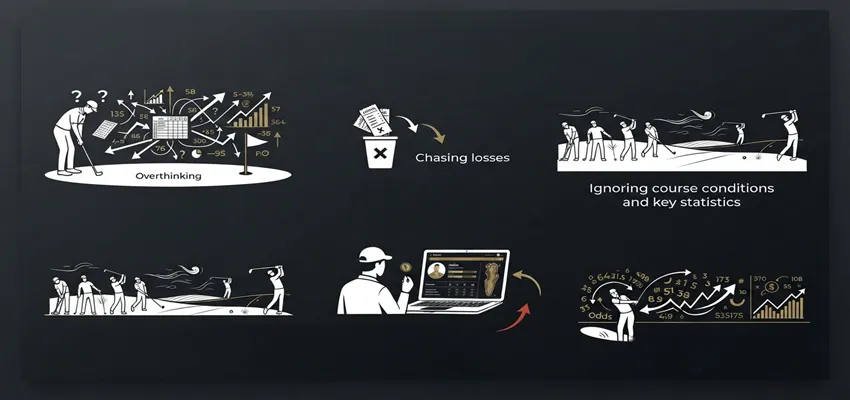
Most of the errors that quietly cost golf bettors money have little to do with picking the wrong player and everything to do with how the bet itself gets structured. Learning how to bet on golf without falling into these same three patterns is largely a matter of slowing down before confirming a wager, not gathering more information.
Ignoring Each-Way Terms Before Betting
Two operators offering the same outright odds can have meaningfully different each-way terms, and skipping this comparison is one of the most common ways bettors leave value on the table without even realising it.
Overvaluing a Single Good Recent Result
A player who won last week carries genuine momentum, but golf’s variance means a single strong result is a smaller sample than it feels like in the moment. Treating one good week as proof of a permanently higher skill level is a common overreaction.
Betting Outright Without Respecting Variance
Backing a player outright at long odds can be a perfectly sound decision, but expecting it to pay off with any regularity misunderstands how golf’s field size affects outcomes. Spreading exposure across each-way bets, matchups, and top-finish markets tends to produce a smoother experience than outright bets alone.

How to Bet on Golf FAQs
What is each-way betting in golf?
Each-way betting splits your stake into a win bet and a place bet. If your player wins, both parts pay out. If they finish inside the specified place terms without winning, only the place portion pays, at a fraction of the win odds.
What are typical each-way terms in golf?
Terms vary by field size and tournament tier, but full-field regular events commonly offer 1/5 odds for the top 8 finishers, while majors and smaller fields often use 1/4 odds for the top 5 or 6 finishers.
What is 3-ball betting?
3-ball betting asks you to pick which of three players grouped for a round’s tee time posts the best score that day, independent of how they finish in the overall tournament.
How does the cut affect golf betting?
After 36 holes, roughly half the field is eliminated. Betting markets shift meaningfully once the cut is applied, since the remaining field is smaller and generally stronger than the full field bet on before the tournament started.
Why do golf odds carry a bigger margin than other sports?
Pricing a market with over a hundred possible outcomes requires the bookmaker to account for far more uncertainty than a simple two-way market, which typically results in a larger combined overround across the full field.
Is matchup betting easier than outright betting?
Many bettors find it more approachable, since it reduces the decision to two named players rather than an entire field, though it still requires genuine research into both players’ current form and course fit.
What are strokes gained statistics?
They measure a player’s performance relative to the field across specific parts of the game: tee shots, approach shots, short game, and putting, offering a more detailed picture than overall scoring average alone.
Does weather really affect golf betting outcomes?
Yes, significantly. Wind in particular changes club selection and shot difficulty across an entire course, and players with a genuine record of handling difficult conditions carry a real edge in windy tournaments.
What’s the biggest mistake beginners make betting on golf?
Ignoring each-way terms before placing a bet. The difference between a generous and a stingy place term on the same odds is a real, quantifiable difference in long-term value.
Are the four major championships bet on differently?
Yes. Each major rewards a different skill set, from Augusta’s fast greens to the U.S. Open’s punishing rough, which means the players who typically contend can vary meaningfully between them.
Playing the Long Season, Not Just One Week
Golf rewards patience more than almost any other sport you’ll bet on, since even a genuinely strong pick will miss more often than it hits across a season of this many entrants. Truly understanding how to bet on golf means respecting each-way terms, course fit, and the structure of the tournament itself, rather than just picking a famous name, which is what separates a considered approach from a hopeful one.
If betting on golf, or any sport, starts to feel less like a bit of entertainment and more like something that’s becoming difficult to control, it’s worth reaching out for support. GamCare provides free and confidential advice through the National Gambling Helpline, with trained advisers available to listen and offer guidance.