Knowing that each-way betting exists is one thing. Actually building a repeatable edge across a season of tournaments this unpredictable is a completely different challenge, and it’s the gap most golf bettors never close. Most people who bet on golf regularly can name every market on the bet slip without ever having built a genuine process for deciding when a price is actually worth taking.

This guide picks up exactly where the mechanics stop, covering how to build your own player ratings, where the market’s public bias actually sits, and how to structure bets across a full season rather than chasing one big week. None of it replaces the fundamentals, but it’s the layer that turns knowing the rules into actually competing with the market.
Golf’s enormous fields mean even the best player rarely carries a true win probability above 20 percent, which changes almost everything about how a genuine strategic edge is built compared to two-outcome sports. Rating players yourself, understanding where public money distorts prices, and sizing bets around the sport’s long-run variance matter more than simply picking winners.
Why Golf Demands a Different Kind of Model
A football match has two or three realistic outcomes. A golf tournament has over a hundred, and treating a golf field with the same instinct you’d apply to a two-team match is where most strategic mistakes actually start. If you still need a refresher on how each-way terms, matchups, or the cut line actually work, the step-by-step golf betting guide covers that groundwork in detail before you build on it here.

Building Your Own Player Rating System
Public rankings lag reality more in golf than in most sports, since a player’s world ranking often reflects results from twelve months ago rather than their current game, weighted across events that may have little bearing on the specific tournament in front of you. Keeping a simple, personal rating built from recent strokes-gained data, course-specific history, and current form gives you a number to compare directly against the market’s price, rather than reacting to a name you recognise.
| Factor | What It Measures | Why It Matters |
|---|---|---|
| Recent Form | Performance over the last few tournaments | Shows current momentum and whether a player’s game is trending upward |
| Course History | Previous results on the same or similar layouts | Highlights players whose skill set matches the venue |
| Strokes Gained Data | Performance across tee shots, approach, short game, and putting | Reveals underlying ability beyond final finishing position |
| Field Strength | Quality of opponents faced in recent events | Provides context behind recent results |
Weighting Recent Form Against Long-Term Data
The strategic question isn’t whether to use recent form or long-term data; it’s how much weight each one deserves for a specific player and a specific setup. A player returning from injury with two strong recent finishes deserves more weight on that recent data than a player who’s simply been steady all year without any real signal of change either way.
Fading the Favourite: A Core Strategic Angle
Because golf fields are so deep, even a dominant player rarely justifies odds much shorter than 6/1 or 8/1 outright, and the market frequently prices recognisable names shorter than their genuine chance warrants. Fading golf favourites in this way creates a repeatable angle worth understanding on its own terms.
| Player Type | Typical Market Behaviour | Strategic Response |
|---|---|---|
| Recognisable former major winner | Often overpriced on name recognition alone | Compare price against current form before backing |
| In-form player outside the top 20 ranking | Frequently underpriced relative to recent data | A common source of each-way value |
| Rookie or first-time contender | Wildly inconsistent pricing due to limited market data | Requires independent research, not consensus odds |
This isn’t about automatically betting against every favourite. It’s about recognising that a short price in golf carries a specific kind of public bias that doesn’t exist in the same way in two-outcome markets.
Reading a Leaderboard Like a Trader, Not a Fan
The market reacts to a leaderboard the same way it reacts to any live score, but golf’s specific public bias patterns are worth understanding on their own.
Where Public Money Distorts Golf Prices
Recreational money concentrates heavily on well-known names regardless of current form, which keeps their price artificially short even during a genuinely poor season. Sharper, in-form players outside the mainstream conversation are frequently where the market’s actual mispricing sits.
Spotting a Genuine Move vs a Temporary Overreaction
A player posting a hot start moves the market immediately, but distinguishing a real signal from a streaky round takes a specific kind of discipline. Checking whether the underlying process ball-striking quality, proximity to the hole, scrambling, actually supports the score, rather than just reacting to the number on the leaderboard, is what separates a strategic read from a reactive one.
Matching Player Profiles to Course Setups
Golf course fit gets mentioned constantly in betting content, but turning it into an actual strategic filter requires more structure than a general sense of “this player likes this course.”
Bombers vs Precision Players
Wide-open courses with generous fairways reward players who prioritise distance over accuracy, since the penalty for a slightly wayward drive is minimal. Tight, tree-lined setups invert that entirely, rewarding accuracy specialists even when their overall distance numbers look modest by tour standards.
Second-Shot Specialists and Approach-Heavy Setups
Some courses are genuinely won and lost on approach play rather than off the tee, particularly venues with small, well-protected greens. Building a shortlist specifically around approach-play statistics for these setups, rather than overall scoring average, tends to surface names the wider market hasn’t fully priced in yet.
Structuring a Golf Betting Portfolio Across a Season
Treating every tournament as an isolated decision misses one of the more useful strategic ideas in golf specifically: thinking in terms of a portfolio rather than a single bet.
Spreading Stakes Across Outright, Each-Way, and Top-Finish Markets
Backing the same player across an outright bet, an each-way bet, and a top-20 finish market creates a layered position that pays out across a wider range of outcomes than any single bet alone, without requiring a separate research process for each one.
Sizing Bets Around Golf’s Long-Run Variance
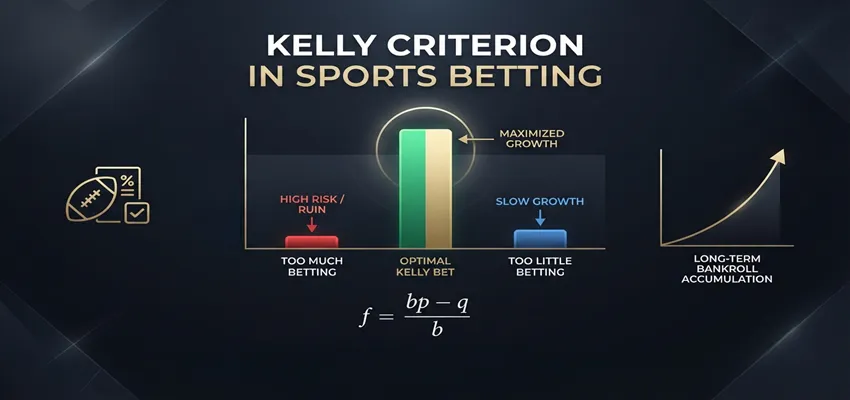
Golf’s odds run considerably longer than most sports, which means the Kelly Criterion framework needs a heavier discretionary haircut here than in tighter markets, since a genuinely sound long-term edge can still produce a losing run stretching across an entire season before it shows up in the results.
Treat a full golf season, not just a single tournament, as your sample size. A strategy that looks ineffective after a few bad weeks can still be genuinely sound once you have enough results to evaluate it fairly.
Using Strokes-Gained Data as a Strategic Edge
Knowing what strokes-gained statistics measure is one thing; building an actual edge from them is another. The strategic value sits in isolating which specific category, off the tee, approach, around the green, or putting, best predicts performance at the exact type of setup you’re analysing, rather than treating the overall number as a single verdict on a player’s form.
| Category | Measures | Most Valuable On |
|---|---|---|
| Strokes Gained Off The Tee | Driving performance and advantage from the tee | Long courses and demanding driving layouts |
| Strokes Gained Approach | Quality of iron shots and green approaches | Technical courses with difficult greens |
| Strokes Gained Around The Green | Short game recovery ability | Courses with missed-green penalties |
| Strokes Gained Putting | Putting performance compared with the field | Useful short-term signal but less stable long term |
A player gaining strokes primarily through putting, for instance, is a genuinely different long-term bet than one gaining the same overall total through ball-striking, since putting form tends to be far less stable week to week than approach play.
Using Tee Times and Wave Splits Strategically
Tournaments split the field into morning and afternoon waves across the first two rounds, and conditions can shift meaningfully between them, particularly wind speed and green firmness. A player drawn into the tougher wave through no fault of their own can post a score that looks weaker than their underlying performance actually was, which the market frequently fails to adjust for fully.
Checking the forecast for each wave before the tournament starts, rather than reacting to scores after the fact, lets you spot this kind of built-in disadvantage before the price reflects it.

Applying Live Strategy on Moving Day and the Final Round
Saturday’s third round, often called moving day, and Sunday’s final round behave differently from the opening two days, since players are now reacting to a genuine leaderboard position rather than simply trying to make the cut. Contenders further back on the leaderboard tend to play more aggressively, which creates a different kind of live betting opportunity than the steadier pricing seen earlier in the week.
Watching how a player responds to pressure specifically in these final rounds, rather than their overall week-long scoring average, tends to reveal far more about genuine closing ability than raw statistics from earlier rounds ever will.
Building a Watchlist Instead of Chasing a Single Pick
Reacting fresh to each tournament without any continuity between weeks makes it far harder to spot a player quietly building form before the wider market catches on. Keeping an ongoing shortlist of players whose underlying numbers are trending upward, even during a run of average finishing positions, often surfaces value several weeks before that player’s price actually reflects it.
This habit matters more than any single statistic covered above, since it’s the difference between reacting to what the market already knows and identifying an edge before it becomes obvious to everyone else.
Match Play Rewards a Completely Different Skillset
Almost everything covered so far assumes standard stroke play, where every shot across four rounds counts toward a single total score. Golf match play events, where players compete hole by hole against a single opponent rather than the whole field, flip several of these assumptions entirely.
A streaky, aggressive player with wildly inconsistent stroke play scores can be a genuinely dangerous match play competitor, since a single hot stretch of holes is enough to close out a match regardless of their overall week. Consistency, which is prized so heavily in outright and each-way stroke play betting, matters far less here than the ability to produce a purple patch exactly when it counts.
Course history and strokes-gained data still matter in match play, but weighting a player’s head-to-head record and their performance under direct pressure more heavily than their average stroke play finish tends to produce a sharper read than simply transferring a stroke play model across formats unchanged.
Picking Up Signals From Practice Rounds and Early Market Moves
Official markets open days before a tournament starts, and the earliest price movements often contain information that hasn’t reached the wider betting public yet. A player quietly backed down in the outright market days before a single competitive shot is struck is frequently reacting to genuine insider knowledge, a good practice round, a swing change paying off, or simply confidence from the player’s own camp filtering through.
Caddie interviews, practice round buzz, and how a player’s team talks about their game in the build-up to a tournament are all qualitative signals that never show up in a spreadsheet of strokes-gained data. None of this replaces genuine statistical research, but treating early market movement as one more data point, rather than ignoring it entirely, rounds out a strategic process that pure numbers alone can miss.
Shopping Golf Each-Way Terms Across Multiple Bookmakers
Most bettors compare outright odds across platforms and stop there, missing one of the more overlooked strategic techniques available in golf specifically. Since each-way terms vary independently of the win odds themselves, it’s entirely possible to find the best win price at one operator and a meaningfully better place term at another, on the same player.
| Approach | What It Captures |
|---|---|
| Single bookmaker, full stake | Convenience, but locked into one operator’s combined terms |
| Split stake across two books | Best win odds at one, best place terms at the other |
| Compare terms before staking | Reveals whether splitting is actually worth the extra effort on a given bet |
This technique only pays off on bets sizeable enough to justify managing two separate tickets, but on a genuinely strong each-way selection, the difference between an average and a generous place term can be worth more than the time it takes to compare.
A Weekly Research Routine Worth Building
Consistency in process matters more in golf than almost any strategy detail covered above. A simple, repeatable weekly routine, checking course setup and recent winners there, reviewing strokes-gained trends for a shortlist of players, and confirming current form before finalising a view, tends to outperform reacting fresh to every single tournament without any structure behind it.
This same discipline, rating players yourself, respecting variance, and treating bets as a portfolio rather than isolated picks, is really the same thinking covered across the sports betting strategy hub for anyone applying this approach beyond golf specifically.
Where a Golf Betting Edge Quietly Erodes
Even a genuinely sound strategy can leak value in ways that are easy to miss week to week. The three patterns below account for most of the erosion, and none of them require more data or research, just more discipline in how existing information actually gets used.

Overfitting a Model to a Small Sample
Building a rating system around three or four recent results feels rigorous but is still a small sample in a sport with this much inherent variance. A model needs a genuinely wide dataset before its output should be trusted over the market’s own price.
Ignoring Correlation Across Multiple Bets
Backing several players who thrive in similar conditions creates hidden correlation, since a single unexpected turn in the weather or course setup can sink every position at once. Treating a shortlist of correlated bets as fully independent understates the real risk being carried into a single tournament.
Chasing a System Without a Genuine Edge
A staking pattern or an angle that worked for a handful of tournaments isn’t automatically a genuine edge, and mistaking a short winning run for a proven system is one of the more common ways bettors abandon sound research in favour of something that simply got lucky recently.
Choosing Where to Put Your Golf Strategy Into Practice
A sharp strategy is only as good as the platform executing it. Comparing coverage and pricing across a shortlist of betting site comparisons is worth doing specifically with golf’s each-way terms in mind, since a stronger place term on the same player is a real, quantifiable edge before a single shot is struck.
Checking current betting bonus offers before committing serious bankroll to a new platform can also stretch your effective edge further, provided the wagering terms attached are actually realistic rather than a headline number designed to look better than it is.

Golf Betting Strategy FAQs
How do you actually build an edge in golf betting?
By comparing your own player ratings, built from recent form and strokes-gained data, against the market’s price rather than reacting to name recognition or public sentiment alone.
What does fading the favourite mean in golf betting?
It means recognising that short-priced, recognisable players are frequently overpriced relative to their genuine win probability in a field this deep, and weighing each-way and top-finish markets accordingly rather than defaulting to the obvious name.
How much of my bankroll should I risk on a single golf bet?
Considerably less than in tighter markets, given how long golf’s odds typically run and how much variance a genuinely sound strategy can absorb before it pays off.
Are strokes-gained statistics worth building a strategy around?
Yes, but the value comes from isolating which specific category best predicts a given setup rather than treating the overall number as a single verdict on form.
Is golf course fit really more predictive than world ranking?
Often, yes, particularly at distinctive venues that reward a specific skill set. World ranking reflects a much broader sample that doesn’t account for how a specific golf course fit actually plays out for a given player.
How do you know if a golf betting model is actually working?
By judging it across a full season rather than a handful of tournaments, since golf’s variance can make a genuinely sound strategy look broken over a small sample.
What’s the biggest strategic mistake in golf betting?
Treating a short winning run as proof of a genuine edge, rather than checking whether the underlying process actually holds up across a wide enough sample to trust.
Should beginners focus on majors or regular tour events?
Regular tour events are usually easier to build genuine research advantages in, since majors attract far more public and media attention, which tends to sharpen pricing on the more obvious contenders.
Does golf match play require a different strategy to stroke play?
Yes. Consistency matters less in golf match play than the ability to produce a hot stretch of holes under direct pressure, which means a player’s stroke play record isn’t always a reliable guide to how they’ll perform in a head-to-head format.
Is it worth splitting a golf each-way bet across two bookmakers?
On larger stakes, yes. Win odds and place terms vary independently between operators, so comparing both separately before committing can be worth more than the extra effort of managing two tickets.
Turning Research Into a Repeatable Process
The bettors who make golf work long-term aren’t the ones who pick the most winners; they’re the ones who’ve built a process sound enough to survive the sport’s brutal variance without abandoning it after a rough month. Rating players yourself, respecting course fit as a genuine filter rather than a vague feeling, and sizing every position around how long golf’s variance can actually run is what separates a strategy from a hunch.
None of this needs to happen all at once. Building a personal rating system, tracking wave splits, and shopping each-way terms across operators can each be added one at a time as they start to feel natural, rather than trying to implement every strategic idea covered here in a single tournament. Golf rewards the bettor who treats this as an ongoing discipline rather than a checklist to finish once and forget.
If betting on golf, or any sport, starts to feel less like a form of entertainment and more like something that’s becoming difficult to manage, support is available. GambleAware is an independent charity that provides free information and guidance to help people make more informed decisions about their gambling.