You look for 1.50, and your gut tells you the team is a lock. You look at 4.00 on the other side and dismiss it as a long shot not worth a second thought. Both reactions are guesses dressed up as instinct, because neither number actually told you a percentage until you did the maths. Implied probability is that maths, and it’s the single fastest way to turn a row of odds into something you can actually reason about.

This isn’t a prediction tool, and it won’t tell you who wins. What it does is translate the price a bookmaker is offering into the chance they think that outcome has, so you can compare it honestly against your own read of the match. Once you can do that in your head, half the guesswork in sports betting disappears. This guide covers where the formula comes from, how to calculate it for any odds format, why the numbers never quite add up to 100 percent, and how it feeds directly into value betting and smart betting more broadly.
Implied probability converts any odds into a percentage chance of that outcome happening, according to the bookmaker’s pricing. Compare that number against your own honest estimate, and you have the starting point for every value bet you’ll ever place.
What Implied Probability Actually Tells You
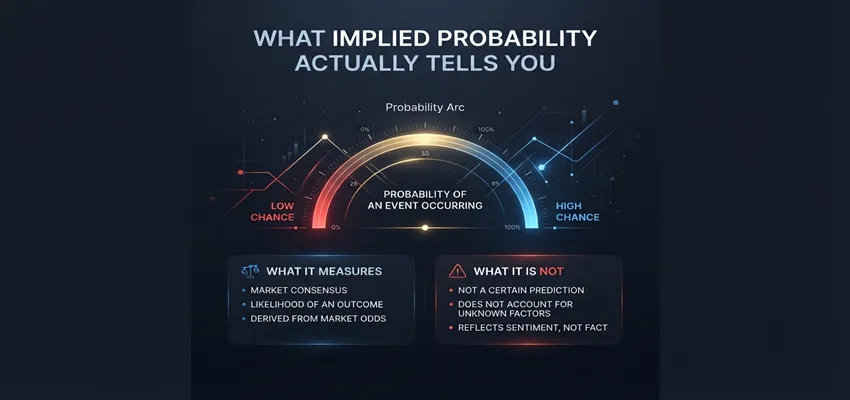
Every price a bookmaker publishes is a claim about likelihood, whether they phrase it that way or not. Implied probability strips away the decimal or fractional formatting and gives you the underlying percentage directly, so you’re no longer comparing prices; you’re comparing chances.
This matters because prices alone are misleading on their own terms. A price of 1.80 sounds cheap and a price of 5.50 sounds generous, but neither description means anything until you know the actual percentage each one represents. Once converted, you can hold that number up against your own assessment of the match and ask a much sharper question: does this price actually reflect how likely I think this outcome is?
How Odds Translate Into a Percentage Chance
Bookmakers set odds using their own models, their customer base, and how much action they expect on each side of a market. Implied probability reverses that process from the outside, letting you read the percentage they’ve priced in without needing access to their internal numbers. If you’re still getting comfortable with the different ways betting odds are displayed, this concept will click faster once you can already recognize a price and roughly judge what it’s saying.
The Implied Probability Formula
For decimal odds, the calculation is short enough to do in your head once you’ve practiced it a few times.
| Variable | Meaning |
|---|---|
| Decimal Odds | The price shown by the bookmaker |
| 1 ÷ Decimal Odds | The raw probability as a decimal |
| × 100 | Converts that decimal into a percentage |
Odds of 2.00 imply a 50 percent chance. Odds of 4.00 imply 25 percent. Odds of 1.25 imply 80 percent. The lower the price, the higher the implied chance, which is exactly why favorites carry short odds and longshots carry long ones.
A Worked Example You Can Follow Along With
Say a tennis player is priced at 1.65 to win their match.
| Step | Calculation | Result |
|---|---|---|
| Decimal odds | Given | 1.65 |
| 1 ÷ 1.65 | Raw probability | 0.606 |
| 0.606 × 100 | Implied probability | 60.6% |
The bookmaker is saying this player has roughly a 60.6 percent chance of winning. Whether that number is fair or generous depends entirely on your own read of the match, which is exactly the comparison implied probability exists to set up.
A Quick Reference for Common Prices
Once you’ve run the calculation a few times, certain prices become recognizable on sight. Keeping a rough mental table of the most common decimal odds saves you from reaching for a calculator every single time.
| Decimal Odds | Percentage |
|---|---|
| 1.20 | 83.3% |
| 1.50 | 66.7% |
| 2.00 | 50.0% |
| 2.50 | 40.0% |
| 3.00 | 33.3% |
| 4.00 | 25.0% |
| 5.00 | 20.0% |
| 10.00 | 10.0% |
Nothing here replaces doing the actual calculation on odds you haven’t seen before, but recognizing these common benchmarks speeds up how quickly you can sanity check a price at a glance.
Why the Numbers Never Add Up to 100 Percent
Convert every outcome in a two-way market into implied probability and add them together, and the total almost always lands above 100 percent, not exactly at it. That extra percentage is the bookmaker’s built-in margin, commonly called the overround or the vig, and it’s how sportsbooks stay profitable regardless of the actual result.
| Outcome | Decimal Odds | Implied Probability |
|---|---|---|
| Player A | 1.90 | 52.6% |
| Player B | 1.90 | 52.6% |
| Combined total | 105.2% |
That extra 5.2 percent isn’t a real reflection of the match; it’s the operator’s cut baked directly into both prices. This margin also varies between operators, which is exactly why checking prices across multiple sportsbooks before you commit tends to shave a percentage point or two off the implied number you’re working with.
When the Total Falls Below 100 Percent Instead
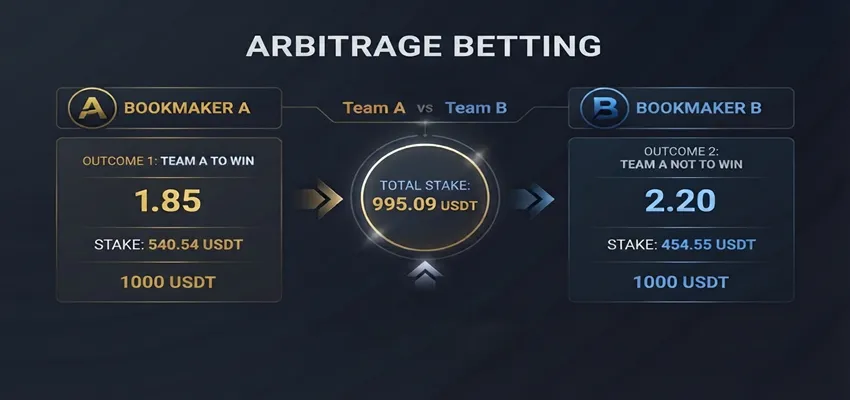
Every so often, two different bookmakers disagree sharply enough that the combined total across their prices drops below 100 percent rather than above it. That inverted gap is the exact signal arbitrage betting is built around, since covering every outcome at that combined price locks in a profit regardless of which result actually happens.
Removing the Overround to Find the Fair Probability
To get closer to the true, vig-free probability, divide each outcome’s implied probability by the combined total and multiply by 100. In the example above, Player A’s fair probability drops from 52.6 percent to roughly 50 percent once the overround is stripped out. Skipping this step is one of the quieter reasons bettors think they’ve spotted value when the price barely clears the bookmaker’s margin.
Implied Probability in Three-Way Markets
Football’s 1X2 market introduces a third outcome, the draw, which changes the arithmetic slightly but not the underlying logic. Instead of two implied probabilities competing for space above 100 percent, you’re now converting three prices and watching the same margin appear across all of them.
| Outcome | Decimal Odds | Implied Probability |
|---|---|---|
| Home win | 2.10 | 47.6% |
| Draw | 3.40 | 29.4% |
| Away win | 3.60 | 27.8% |
| Combined total | 104.8% |
The 4.8 percent overround here is spread across three outcomes rather than two, which tends to make each price look slightly more reasonable on its own even though the bookmaker’s total edge is similar. Removing the margin works the same way as in a two-way market, dividing each outcome by the combined total to reach the fair, vig-free number.
Implied Probability vs Your Own Estimate
This number only becomes useful once you have something to compare it against, and that something is your own honest read of the match. This comparison sits at the exact center of identifying value bets, since a value bet is nothing more than a case where your estimate and the market’s price genuinely disagree.
| Outcome | Bookmaker Implied Probability | Your Estimated Probability | Verdict |
|---|---|---|---|
| Underdog | 30% | 38% | Value bet |
| Favorite | 65% | 60% | No value |
| Draw | 27% | 33% | Value bet |
Implied Probability and Closing Line Value
Comparing your estimate against a single snapshot of implied probability only tells part of the story. Watching how that percentage moves between the moment you place a bet and the moment the event actually starts adds a second, equally useful layer.
If the implied probability you backed drifts lower before kickoff, meaning the price got shorter, that’s usually a sign the market moved in the direction your estimate predicted. Consistently beating the closing number this way is one of the clearest signals that your process for reading value holds up under real conditions, rather than just producing occasional lucky results. Bettors who track this over time, rather than judging themselves bet by bet, tend to get a far more honest picture of whether their edge is genuine.
Using an Implied Probability Calculator
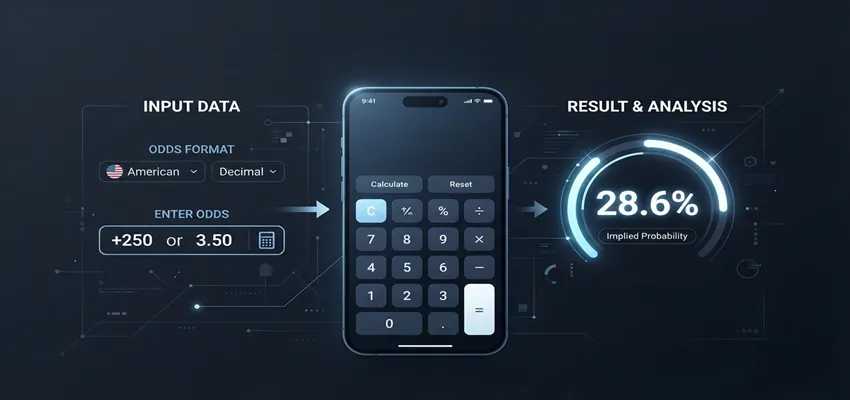
Doing this maths by hand for one or two matches a week is fine, but it gets tedious once you’re checking several markets a day. Our betting calculators page includes an odds converter built for exactly this, turning any price into its implied probability instantly so you can spend your time on the actual analysis instead of the arithmetic.
Implied Probability Across Different Odds Formats
The underlying probability never changes based on how the price is displayed; only the maths you use to reach it does. Getting comfortable converting decimal odds first makes every other format easier, since decimal is the simplest starting point and the one most calculators default to.
| Format | Example | Implied Probability Formula |
|---|---|---|
| Decimal | 2.50 | (1 ÷ Decimal) × 100 |
| Fractional | 6/4 | Denominator ÷ (Numerator + Denominator) × 100 |
| American (positive) | +150 | 100 ÷ (Odds + 100) × 100 |
| American (negative) | -200 | Odds ÷ (Odds + 100) × 100 |
Reading Percentages Once the Match Has Started
The same formula applies just as cleanly to in-play markets, only the pace of everything changes. A shifting scoreline or a red card can move a price within seconds, and converting that new number into a percentage tells you instantly whether the market has overreacted or genuinely reassessed the situation. Our live betting guide goes deeper into acting on these fast-moving numbers before the price settles back to where it should be.
What Happens to the Percentage in a Parlay
Combining several selections into one bet doesn’t just multiply the odds; it multiplies the underlying chance too, and the effect is easy to underestimate. Three legs each priced with a rough 50 percent chance don’t combine into anything close to 50 percent overall, since each probability has to be multiplied by the next.
| Legs | Individual Chance Each | Combined Probability |
|---|---|---|
| 2 legs | 50% each | 25% |
| 3 legs | 50% each | 12.5% |
| 4 legs | 50% each | 6.25% |
Every added leg compounds the bookmaker’s margin as well, since each price already carries its own slice of overround. This is a big part of why parlays look tempting on the potential payout but tend to be one of the least efficient ways to grow a bankroll over time, a pattern that’s worth understanding fully before combining more than two or three selections into a single ticket.
Before combining legs into a parlay, convert each one into its implied probability and multiply them together yourself. Seeing the combined chance drop into single digits is usually a faster gut check than staring at the inflated payout figure.
Common Mistakes When Reading Implied Probability
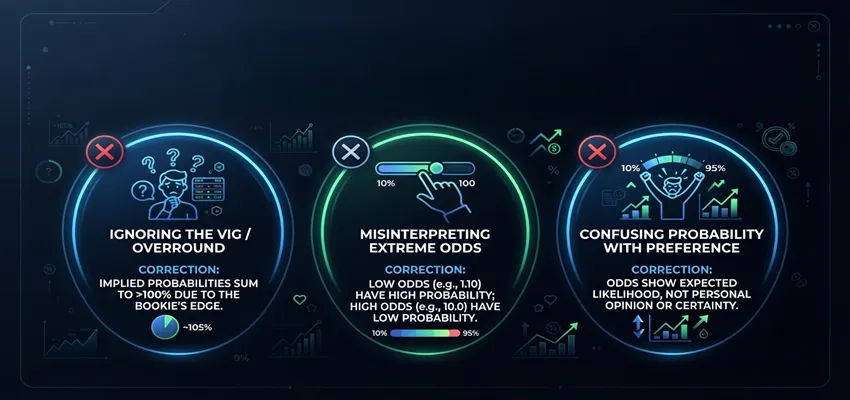
The maths itself is simple enough once you’ve done it a few times, which is exactly why most of what goes wrong afterward has nothing to do with the calculation. The four patterns below account for nearly every misread bettors make once they’ve already learned the formula.
Treating Implied Probability as the Real Chance
The single most common mix-up is forgetting that this percentage already includes the bookmaker’s margin. Every number calculated straight from the odds is inflated slightly above the true chance, which is exactly why removing the overround matters before you compare it against your own estimate.
Ignoring How Fast Odds Move
A price that implies 55 percent an hour before kickoff can imply something entirely different by the time team news lands. Implied probability is only a snapshot, and checking it again closer to the event is a habit worth building rather than trusting the first number you saw.
Comparing Odds Without Comparing Probabilities
Two prices that look similar on paper, like 2.10 and 2.05, can represent a meaningfully different implied chance once converted. Comparing raw decimals across bookmakers is far less precise than comparing the actual percentages behind them.
Assuming a Bigger Sample Confirms the Number
A price implying 70 percent that wins three times in a row can feel like proof the number was right, when three events tell you almost nothing statistically. Implied probability describes a tendency across a large number of similar situations, not a pattern you can confirm from a handful of results either way.
Tips for Reading Implied Probability Like a Professional
Convert every price you’re seriously considering into a percentage before you place a bet, rather than trusting how cheap or expensive it looks at a glance. This single habit removes most of the guesswork that trips up casual bettors.
Always account for the overround before concluding value, since the raw implied number is never quite the fair one.
Recheck implied probability close to kickoff on anything you’re planning to back, since a number calculated the night before can be stale by the time markets settle.
Keep a simple note of the implied probability you calculated against your own estimate for every serious bet. Reviewing that record after a few dozen wagers shows you far more about whether your judgment holds up than any single result ever could.
From Percentage to Stake Size
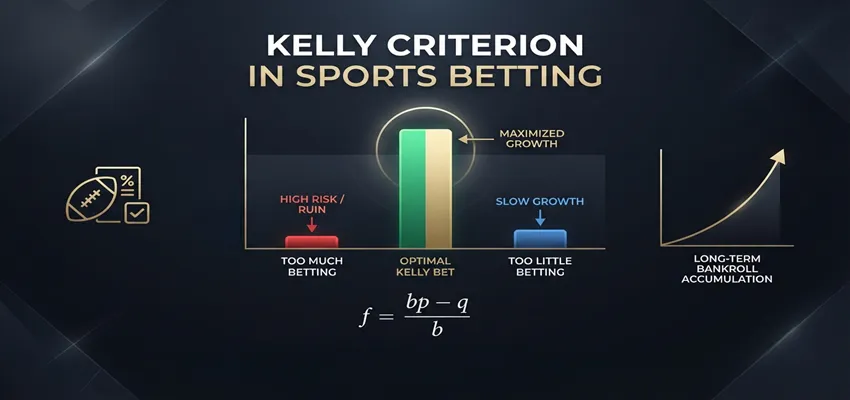
Spotting a gap between implied probability and your own estimate is only half the job. Once you’re confident an edge is genuine, the next question is how much of your bankroll that edge is actually worth risking, since treating every value bet as deserving the same stake ignores how large or small the disagreement actually is. The Kelly Criterion takes exactly this gap, between what you believe and what the odds imply, and converts it directly into a precise stake recommendation rather than a flat guess.

Implied Probability FAQs
What is implied probability in betting?
Implied probability is the percentage chance of an outcome, calculated directly from the odds a bookmaker offers. It shows what the market is pricing in, which you can then compare against your own estimate of how likely that outcome actually is.
How do you calculate implied probability from decimal odds?
Divide 1 by the decimal odds, then multiply the result by 100. Odds of 2.00 give an implied probability of 50 percent, and odds of 4.00 give 25 percent.
Why do implied probabilities add up to more than 100 percent?
The total includes the bookmaker’s built-in margin, known as the overround or vig. This extra percentage is how sportsbooks stay profitable regardless of which outcome actually happens.
What is fair probability and how is it different?
Fair probability is implied probability with the overround removed, giving a more accurate estimate of the true chance. You calculate it by dividing each outcome’s implied probability by the combined total across the whole market.
Is implied probability the same as value betting?
No. Implied probability is a calculation, while value betting is a strategy built on comparing that calculation against your own estimate. A value bet only exists when the two numbers genuinely disagree.
Can implied probability predict the outcome of a match?
No. It only reflects what the odds suggest about likelihood, not what will actually happen. A high implied probability can still lose, and a low one can still win, since probability describes a tendency across many events, not a guarantee on one.
How often does implied probability change before an event?
It can shift constantly as team news, injuries, and market activity come in. Checking the number again close to kickoff, rather than relying on an earlier calculation, is a habit worth building.
Does implied probability work the same for every sport?
Yes, the maths is identical regardless of sport. What changes is how confidently you can form your own competing estimate, which depends on how well you understand the specific markets involved.
What’s the easiest way to calculate implied probability quickly?
Using an implied probability calculator removes the manual arithmetic entirely, letting you convert prices instantly across several markets rather than working each one out by hand.
Do all odds formats show the same implied probability?
Yes, once converted correctly. Decimal, fractional, and American odds are simply different ways of displaying the same underlying chance, so the same event priced in any format should produce the same implied probability.
Putting Implied Probability to Work
This number isn’t a shortcut, and it won’t hand you winning picks. What it does is give every price you look at an honest number attached to it, so you can stop reacting to how cheap or generous odds feel and start comparing them against something concrete. That single shift, from vibes to percentages, is the foundation nearly every other betting strategy on this site builds on top of.
None of this replaces the responsibility to bet within your means. If working through odds and probabilities ever stops feeling like a useful habit and starts feeling hard to put down, free and confidential support is available through GamCare, an independent UK charity that runs the National Gambling Helpline.