The FIFA World Cup 2026 has come to a dramatic close, with Spain defeating Argentina 1-0 after extra time in the final on 19 July 2026 at New York/New Jersey Stadium. Ferran Torres settled the contest in the 106th minute, handing Spain its second World Cup title and denying Argentina back-to-back championships.
The tournament, hosted jointly by Canada, Mexico, and the United States, marked a completely new era for international football. For the first time, 48 teams competed across 104 matches and 16 host cities, and the FIFA World Cup 2026 will be remembered as one of the most competitive and closely fought editions in the competition’s history.

This massive expansion was structural and competitive rather than just geographical. With the total number of national teams increasing from 32 to 48, this iteration stands as the largest tournament ever organized by FIFA. This strategic shift drastically enhanced global representation, offering expanded avenues for teams from Africa (CAF), Asia (AFC), and North America (CONCACAF) to compete at the pinnacle of international sports. The group stage lived up to expectations, delivering some of the most competitive matches in the history of the FIFA World Cup 2026.
Beyond the pitch, the event served as a technological and commercial landmark. The integration of artificial intelligence data models, state-of-the-art broadcasting overlays, immersive fan engagement strategies, and real-time biometric analytics reshaped how sports fans, professional analysts, and users of sports prediction platforms engaged with the game. In many ways, the FIFA World Cup 2026 acted as a testing ground for the future of sports technology and modern fan interaction.
The official FIFA tournament information can be found Here
The 48-Team Tournament Format and Structural Evolution
The implementation of the 48-team framework introduced a completely redesigned competitive blueprint for the FIFA World Cup 2026. Instead of the historical 32-team system divided into eight groups of four, the model split the 48 nations into 12 groups of four teams each, designated from Group A through Group L. This design increased the total number of matches from 64 to 104, extending the tournament schedule into a 39-day football marathon. This format eliminated easy paths to the knockout rounds, forcing elite teams to be sharp from day one.
The most critical operational adjustment resided in the qualification criteria for the knockout stage. The top two teams from each of the 12 groups earned automatic entry into the newly introduced Round of 32. They were joined by the eight best third-placed teams across the entire group stage spectrum, determined by an exact tie-breaking hierarchy:
- Total accumulated group stage points
- Superior goal difference across all group fixtures
- Highest volume of goals scored in all group matches
- Team conduct score (subtraction of points based on yellow/red cards)
- Official FIFA World Ranking position
This revised format altered traditional group stage mathematics for every country involved in the FIFA World Cup 2026. In the past, a single loss in the opening fixture often forced a team to adopt ultra-defensive or low-risk parameters to scrape a second-place finish.
In this setup, every single goal scored and conceded carried monumental weight. A high-scoring defeat could still provide a viable path to the Round of 32 if a team maintained a strong positive metric in the third-place wild card rankings. Consequently, tactical frameworks for the FIFA World Cup 2026 prioritized attacking efficiency and continuous squad management.
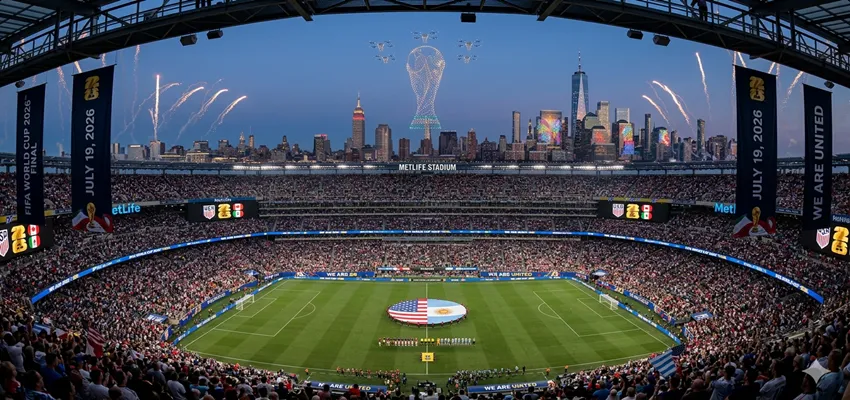
FIFA World Cup 2026 Final Result and Records
Spain closed out the FIFA World Cup 2026 with a defensive masterclass, conceding just a single goal across the entire tournament, a record for any World Cup champion. The run extended Spain’s unbeaten streak to 38 matches (29 wins, nine draws), the longest such run by any European national team in history.
The final itself was a tense, low-scoring affair. Argentina’s goalkeeper Emiliano Martínez produced 11 saves, the most ever recorded by a goalkeeper in a men’s World Cup final, and held Spain scoreless through 90 minutes of regulation. Ferran Torres finally broke the deadlock in the 106th minute of extra time, sealing a 1-0 win and Spain’s second World Cup title (their first came in 2010).
For Argentina, the result ended their bid to become the first nation since Brazil (1958, 1962) to win back-to-back World Cups. It was also widely expected to be Lionel Messi’s final World Cup appearance, adding an emotional weight to Argentina’s run to the final.
In the third-place playoff on 18 July, England defeated France in Miami to claim bronze, with Jude Bellingham among England’s goalscorers in a high-scoring Bronze Final.
Path to the Final
- Spain beat Portugal, then Belgium 2-1 in the quarter-final, and France in the semi-final en route to the title.
- Argentina beat Switzerland 3-1 after extra time in the quarter-final, then eliminated England in the semi-final, before falling to Spain in the final.
- England knocked out Norway 2-1 after extra time in the quarter-final before losing to Argentina in the semi-final, then beat France to finish third.
- France, led by Kylian Mbappé, beat Morocco 2-0 in the quarter-final before losing to Spain in the semi-final and to England in the Bronze Final.
If matches like Spain’s tense final or Argentina’s extra-time quarter-final against Switzerland had you tracking the odds, our football betting guide breaks down how those markets work, and our football betting strategies page covers how to approach tournament-style knockout betting specifically.
Complete Group Stage Analytical Breakdown (Groups A–L)
Group A: The Crucial Opening Phase
Teams: Mexico, South Korea, South Africa, Czechia
Tactical Environment: This group carried unparalleled emotional and psychological weight, headlined by host nation Mexico launching the tournament at the iconic Estadio Azteca in Mexico City. As a core focal point of the FIFA World Cup 2026, Mexico relied on high-tempo wing play and an intense home environment. South Korea countered with elite transitional speed and structured mid-blocks. Czechia provided extreme physical resilience and set-piece dominance, while South Africa utilized fluid short-passing structures to disrupt opposition defensive lines.
Group B: The Multi-Continental Clash
Teams: Canada, Switzerland, Qatar, Bosnia and Herzegovina
Tactical Environment: Co-host Canada brought an athletic, high-pressing tactical philosophy aimed at maximizing open space on home soil. Switzerland offered immense tactical maturity, relying on positional discipline and experienced midfield anchors to control game tempos. Qatar implemented highly drilled, low-block defensive shapes with rapid counter-attacking triggers, while Bosnia and Herzegovina operated with a highly physical aerial presence and direct vertical distribution.
Group C: Elite Technical Warfare
Teams: Brazil, Morocco, Scotland, Haiti
Tactical Environment: Headlined by five-time champions Brazil, Group C demanded elite technical execution. Brazil employed fluid positional rotation with explosive isolation wingers. Morocco, building upon its historical defensive resilience, displayed an advanced mid-block system paired with ultra-fast wing-back transitions. Scotland countered with a highly organized low-block, focusing on defensive overloads and crossing efficiency, while Haiti relied on high-energy pressing and individual athletic duels.
Group D: High-Intensity Transition Zone
Teams: United States, Paraguay, Australia, Türkiye
Tactical Environment: Operating heavily on home soil, the United States Men’s National Team (USMNT) presented a dynamic, youth-driven squad executing a high-intensity counter-press. Paraguay introduced a notoriously aggressive, physical defensive style built to disrupt midfield flow. Australia brought relentless work rates, utilizing robust physical structures and direct wide overloads, while Türkiye added high-level technical creativity, focusing on rapid interior combinations and long-range shooting profiles.
Group E: Central European Control vs. Athletic Prowess
Teams: Germany, Ecuador, Ivory Coast, Curaçao
Tactical Environment: Germany centered its identity on possession-based positional play, utilizing inverted full-backs and box-midfield overloads to strangle transition spaces. Ecuador presented an incredibly physical and young energetic core capable of sustained high-altitude press performance. The Ivory Coast infused the group with elite individual power, utilizing explosive box-to-box midfielders and dynamic wide isolation, while Curaçao acted as a tactical wild card with fluid, opportunistic counter-attacking strategies.
Group F: The Positional Chessboard
Teams: Netherlands, Japan, Sweden, Tunisia
Tactical Environment: A group defined by architectural soccer. The Netherlands featured an asymmetric three-at-the-back buildup system designed to create overloads in the half-spaces. Japan responded with the world’s most disciplined defensive shifting and lightning-fast collective counter-pressing transitions. Sweden delivered an ultra-stable, compact defensive block focusing on zone coverage and aerial dominance, while Tunisia employed a high-friction, low-tempo defensive strategy designed to break opposition rhythm.
Group G: Midfield Domination Matrix
Teams: Belgium, Egypt, Iran, New Zealand
Tactical Environment: Belgium entered a new tactical era, utilizing fluid half-space creators to break down low blocks. Egypt built its entire framework on defensive consolidation paired with isolated, world-class transitional outlets on the flank. Iran implemented a highly compact, aggressive low-block system that restricted central space, while New Zealand focused on disciplined defensive shapes, utilizing target-man variations and direct aerial service.
Group H: Iberian Sophistication and South American Grit
Teams: Spain, Uruguay, Saudi Arabia, Cape Verde
Tactical Environment: Spain implemented its traditional, high-possession counter-pressing philosophy, seeking numerical superiority in all phases of the pitch, a philosophy that would carry them all the way to the title. Uruguay brought its legendary combative defensive mentality integrated with a modern, high-intensity transition engine that overloaded the central third. Saudi Arabia focused on high-technical cohesion and rapid short-passing triangles, while Cape Verde utilized athletic wingers and unpredictable individual movements to expose overextended defenses.
Group I: The Power and Precision Quad
Teams: France, Senegal, Norway, Iraq
Tactical Environment: France presented the ultimate balanced squad, capable of transitioning instantaneously from a deep, impenetrable mid-block to devastating vertical counter-attacks, a balance that carried them to the semi-finals. Senegal matched this elite physical profile, utilizing robust defensive lines and explosive direct attacking play. Norway focused its entire tactical architecture on generating premium central scoring opportunities for its elite focal striker, Erling Haaland, while Iraq operated with high defensive friction and maximum central density.
Group J: The Champion’s Gauntlet
Teams: Argentina, Austria, Algeria, Jordan
Tactical Environment: Defending world champions Argentina controlled matches via technical superiority, utilizing short-passing rondo patterns to lure opposition presses out of position before exploiting structural gaps, a formula that carried them all the way to the final. Austria brought a highly aggressive, modern counter-pressing system designed to force turnovers in the final third. Algeria countered with high technical flair and creative isolation wingers, while Jordan implemented an organized, disciplined low-block focusing on set-piece capitalizations.
Group K: Global Tactical Diversity
Teams: Portugal, Colombia, Uzbekistan, DR Congo
Tactical Environment: Portugal possessed an incredibly deep tactical catalog, blending advanced positional fluid play with intense central overloads, a run that ended only at the hands of eventual champions Spain. Colombia infused matches with high-tempo physical duels, sophisticated wide rotations, and creative playmaker profiles. Uzbekistan presented a highly disciplined, ascending technical framework built on quick defensive-to-offensive transitions, while DR Congo utilized pure physical dominance and direct flank acceleration to stretch defensive lines.
Group L: The Heavyweight Friction Zone
Teams: England, Croatia, Ghana, Panama
Tactical Environment: England maximized squad depth by utilizing structured build-ups, interior underlaps, and elite set-piece variations, a squad that would go on to finish third. Croatia commanded matches through a highly experienced, press-resistant central midfield triangle that dictated tempo and controlled localized zones. Ghana introduced high-octane physical energy and explosive transitions through the central corridors, while Panama relied on a highly integrated defensive unit operating on low-risk vertical clearances and high-friction tackling.

Tactical Evolution in Modern International Football
The expanded ecosystem of the FIFA World Cup 2026 accelerated several modern tactical trends. International managers no longer possess the extensive training camp periods seen in club football, forcing them to implement highly efficient, conceptually clear, yet functionally fluid game plans.
Dynamic Positional Interchange Systems
The modern game has moved past static formations such as a rigid 4-4-2 or a standard 4-3-3. Teams participating in the FIFA World Cup 2026 utilized completely different shapes in the defensive phase versus the attacking phase. For example, a team defending in a compact 5-4-1 block would immediately shift into an expansive 3-2-4-1 during the build-up phase.
Full-backs regularly tucked inside to act as temporary defensive midfielders (inverting), allowing advanced central midfielders to push higher into the half-spaces. This created numerical superiorities (4 vs 3 or 3 vs 2) in central zones, effectively neutralizing opposition counter-attacking paths before a turnover even occurred.
High-Friction Pressing and Energy Management Models
With a total of 104 matches played across multiple time zones and varying climates, ranging from the high altitude of Mexico City to the indoor controlled climates of US stadiums, energy optimization was a prime tactical focus. Teams could not execute a constant, high-intensity 90-minute press without devastating physical drops in later stages of the tournament.
Coaches used calculated pressing triggers. Instead of chasing the ball continuously, blocks remained passive until the ball entered a specific trap zone (e.g., a pass directed toward a weak-footed opposition full-back near the touchline). Once triggered, the pressing intensity spiked instantly to force a localized turnover close to the opponent’s goal, a trend that defined the tempo of the FIFA World Cup 2026.
Real-Time Data and AI-Driven Coaching
The modern technical bench operated as a data processing center. During the FIFA World Cup 2026, coaches received live feeds from player-worn GPS tracking systems, biometric sensors, and AI-powered tactical positioning algorithms. These models analyzed parameters such as:
- Sprinting Degradation: Identifying exactly when a winger’s maximum acceleration dropped by a significant percentage, indicating immediate substitution needs.
- Expected Goals Conceded (xGA): Measuring the structural integrity of the defensive line based on the quality of shots allowed from specific zones.
- Pass Completion Probability Maps: Highlighting exactly which passing lanes were being effectively covered by the opposition block, allowing tactical updates to be sent straight to the pitch via real-time instructions.
Deep Dive: Dark Horses and Surprise Contenders
The expanded 48-team ecosystem of the FIFA World Cup 2026 inherently created a higher statistical probability for monumental tournament upsets. The presence of a Round of 32 meant that one highly organized, tactical performance could eliminate an elite global superpower.
Morocco
The Atlas Lions proved to the world at Qatar 2022 that African defensive organization could neutralize elite European attacking blocks. Entering the FIFA World Cup 2026, Morocco refined its possession parameters, no longer relying exclusively on a deep low block. By utilizing highly creative midfield profiles combined with world-class overlapping full-backs, Morocco forced opposition wingers to track back deeply into their own defensive halves. Morocco’s run ultimately ended in the quarter-final, where France won 2-0.
Japan
The Samurai Blue represented the gold standard of collective discipline and high-speed execution. Japan’s tactical framework was built around structural elasticity, making it a nightmare for traditional giants to break down. They could transition seamlessly from an aggressive, high-pressure approach to an incredibly compact, narrow mid-block mid-game without making personnel substitutions. Japan’s tournament ended in the round of 32, where they faced group-stage winners Brazil.
USA
As a co-host nation, the United States benefited from immense home support and stadium familiarity. The current generation of American players featured individuals performing at the absolute highest tiers of European club football. The USMNT’s tactical identity centered on an incredibly athletic midfield engine designed to disrupt the build-up play of traditional powerhouses. The USMNT’s home tournament ended in the round of 16 against Belgium.
Senegal
Senegal remained a premium threat due to its unique combination of elite athletic metrics and high-level technical composure. The Lions de la Téranga prioritized verticality, focusing on winning defensive duels in the middle third and immediately launching direct diagonal passes to isolate their rapid wide forwards against opposition center-backs. Senegal ultimately exited the 2026 FIFA World Cup in the Round of 32, losing 3-2 to Belgium after extra time.
Croatia
Croatia continued to defy demographic metrics by consistently producing world-class results on the international stage. Their primary tactical weapon was an elite, press-resistant midfield structure, excelling at slowing down the tempo of matches and neutralizing high-intensity pressing teams by maintaining possession through safe triangular passing angles. Croatia’s run ended in the round of 32 against a Portugal side that would go on to fall to eventual champions Spain.
Premium Championship Favorites: Structural Powerhouse Analysis
Brazil
The Seleção entered the competition under immense pressure to secure its sixth star. Brazil’s tactical blueprint relied on maximizing wide isolation duels, systematically overloading the central corridor to force the opponent’s defensive block to contract inward before switching play to world-class, explosive wingers. Defensively, Brazil implemented a highly aggressive counter-press led by athletic box-to-box midfielders. Brazil’s bid for a sixth star ended in the round of 16 against Norway.
France
Les Bleus possessed arguably the most complete and balanced squad depth in global football. Under structured tactical guidance, France built an incredibly secure defensive mid-block, closing down internal passing corridors and forcing opponents into low-probability wide crosses, then utilizing devastating vertical pace on the turnover. France reached the semi-finals before losing to eventual champions Spain, then closed out the tournament with a Bronze Final defeat to England.
Argentina
The reigning world champions approached the tournament with immense tactical maturity and a highly settled team identity, anchored by fluid positional interchanges in the central third. They constructed short-passing patterns designed to draw out the opposition’s central press before executing precise diagonal runs into the vacated space. Argentina’s title defense fell just short: they reached the final for a second straight tournament but were beaten 1-0 by Spain in extra time.
England
The Three Lions boasted an incredible wealth of young, elite attacking talent and arguably the deepest squad list in the entire tournament. England’s tactical approach centered on control and structural balance, utilizing an advanced build-up structure with fluid attacking midfielders operating between the opponent’s midfield and defensive lines. England went further than most pre-tournament predictions had them, reaching the semi-final before losing to Argentina, and closed the tournament with a third-place finish.
Germany
Germany had systematically rebuilt its international identity around structural efficiency and highly advanced positional play, focusing on absolute spatial domination through an aggressive counter-press and creative interior playmakers. [DOĞRULAYIN: Almanya’nın hangi turda elendiğini FIFA.com’dan teyit edip buraya tek cümle ekleyin; grup aşamasında Ekvador’a 2-1 kaybettikleri biliniyor ama sonraki tur bilgisi doğrulanmadı.]
Elite Players to Watch: Technical and Tactical Impact
Kylian Mbappé (France)
Tactical Role: Left-Flank Inside Forward / Central Attacking Outlet. Impact Metrics: Mbappé represented the ultimate transitional weapon in modern football. His explosive acceleration allowed him to exploit high defensive lines with devastating efficiency, and his ability to cut inside onto his stronger right foot forced central defenders to step out, creating critical structural gaps for his teammates.
Jude Bellingham (England)
Tactical Role: Box-to-Box Midfielder / Advanced Modern Raumdeuter. Impact Metrics: Bellingham provided an elite physical and technical presence in the central third. He could drop deeply to assist in the initial phase of the build-up, break up opposition transitions via aggressive tackling, and make late runs directly into the box.
Vinícius Júnior (Brazil)
Tactical Role: Isolated Left Winger. Impact Metrics: Vinícius Júnior was the world standard for wide isolation efficiency. Brazil’s tactical system was purposefully designed to create 1v1 situations for him on the left touchline.
Erling Haaland (Norway)
Tactical Role: Pure Focal Point Center Forward. Impact Metrics: Haaland redefined the modern target-man profile, combining immense physical power with elite acceleration and world-class off-the-ball movement. His constant pinning of opposition center-backs opened up massive operational space for inverted wingers in the half-spaces.
Pedri (Spain)
Tactical Role: Interior Advanced Playmaker. Impact Metrics: Pedri served as the absolute orchestrator of tempo for the eventual champions. Operating in tight central spaces, his exceptional press resistance allowed him to hold onto the ball under extreme physical pressure, specializing in line-breaking passes.
Jamal Musiala (Germany)
Tactical Role: Creative Attacking Midfielder / Inverted Left Playmaker. Impact Metrics: Musiala possessed elite close-control dribbling metrics that allowed him to navigate through tight central overloads, excelling at turning inside the half-spaces and creating immediate numerical superiorities in the final third.
Infrastructure, Stadium Logistics, and Cultural Synergy
The tri-nation infrastructure network for the FIFA World Cup 2026 presented an unprecedented operational scale. The competition was distributed across 16 world-class venues, organized into three distinct geographic regions (Western, Central, and Eastern) to minimize cross-continental travel fatigue during the group stage.
Each host nation infused the tournament with a highly distinct cultural and infrastructure profile:
- The United States: Provided ultra-modern NFL stadiums equipped with massive seating capacities, state-of-the-art retractable turf systems, and high-tech hospitality zones. MetLife Stadium in New York/New Jersey hosted the final.
- Mexico: Delivered unmatched football heritage and deep emotional passion. The Estadio Azteca became the first stadium in history to host matches in three separate World Cup editions (1970, 1986, 2026), offering a challenging high-altitude atmosphere.
- Canada: Brought a rapidly expanding football market and highly specialized urban sporting infrastructure. Venues such as BC Place in Vancouver and BMO Field in Toronto offered intimate, highly energetic fan environments.
Macroeconomic Dynamics and Commercial Scale
The commercial projection for this multinational tournament exceeded all historical sports benchmarks. The expansion to 104 matches created an unprecedented volume of inventory for broadcasting corporations, corporate sponsors, hospitality giants, and regional tourism markets.
Infrastructure Influx and Tourism
Host cities underwent deep structural modernizations, including massive public transportation upgrades, airport expansions, and hotel infrastructure developments. Local economies benefited from millions of traveling international fans, generating billions of dollars in consumer spending across hospitality, retail, and local entertainment sectors.
Broadcasting Innovations and Digital Inventory
Broadcasting networks utilized advanced technological suites to deliver immersive global feeds, integrating real-time tactical overlays, multi-camera angle fan choices via streaming apps, and automated AI highlights. This massive increase in match count provided corporate brands with unparalleled global advertising visibility, driving commercial sponsorship revenue to all-time highs.
The Digital Sports Analytics and Fan Engagement Ecosystem
The growth of global sports engagement transformed how modern fans interacted with the FIFA World Cup 2026. Millions of users no longer consumed football passively, instead relying on advanced data platforms, statistics aggregators, and sports analytics networks to deepen their tactical engagement.
Many fans following the tournament’s betting markets also had to navigate a shifting regulatory picture, with several licensed operators adapting to the new betting regulations in Europe 2026 throughout the summer.
Comprehensive betting site reviews helped users evaluate platforms on liquidity, navigation, promotions, and mobile experience before choosing where to follow the action.
The Scale of the Modern Sports Analysis Market
International tournaments function as the single greatest driver of sports analysis activity worldwide, and the FIFA World Cup 2026 was estimated to have broken records for data consumption and fan engagement. This growth was fueled by the widespread availability of mobile applications, localized digital transaction systems, and real-time data streaming.
The integration of machine learning algorithms allowed fans to track microscopic performance metrics, such as individual player running speeds, localized passing accuracy percentages, and real-time defensive shifting maps.
With hundreds of matches and betting opportunities available throughout the tournament, following a disciplined bankroll management strategy for sports betting helped bettors manage risk and avoid emotional decision-making.

FIFA World Cup 2026 FAQs
Who won the FIFA World Cup 2026?
Spain won the FIFA World Cup 2026, defeating Argentina 1-0 after extra time in the final on 19 July 2026. Ferran Torres scored the only goal in the 106th minute, giving Spain its second World Cup title after their first in 2010.
Where was the FIFA World Cup 2026 final played?
The FIFA World Cup 2026 final was played at New York/New Jersey Stadium (MetLife Stadium) in East Rutherford, New Jersey, in front of a crowd of more than 80,000 people.
How many teams competed in the FIFA World Cup 2026?
The FIFA World Cup 2026 was the first edition to feature 48 teams, up from 32 in previous tournaments. The expanded format split the field into 12 groups of four, with 104 matches played across 16 host cities in Canada, Mexico, and the United States.
What records were broken at the FIFA World Cup 2026?
Spain set a new record at the FIFA World Cup 2026 by conceding only one goal across the entire tournament, the fewest ever by a champion. In the final, Argentina’s goalkeeper Emiliano Martínez made 11 saves, the most ever recorded by a goalkeeper in a men’s World Cup final.
Who finished third at the FIFA World Cup 2026?
England claimed third place at the FIFA World Cup 2026, defeating France in the Bronze Final in Miami on 18 July, with Jude Bellingham among England’s goalscorers.
Was the FIFA World Cup 2026 Lionel Messi’s last World Cup?
Argentina reached the final of the FIFA World Cup 2026 but lost 1-0 to Spain, and the tournament was widely expected to be Lionel Messi’s final World Cup appearance, adding emotional weight to Argentina’s run.

Conclusion: The Ultimate Football Evolution
Spain’s 1-0 extra-time win over Argentina brought the curtain down on a FIFA World Cup 2026 that will be remembered as much for its historic defensive records as for its expanded, 48-team format. The FIFA World Cup 2026 stood as a monumental landmark in the history of global sport. By expanding the competitive field to 48 teams, integrating three North American host nations into a single hosting network, and introducing a completely redesigned 12-group format, FIFA initiated a comprehensive revolution in international football.
The tournament represented a fascinating intersection of sport, culture, and science. On the pitch, fluid positional tactics reached new heights. Behind the scenes, advanced AI tracking systems reshaped how teams prepared. Across the world-class stadiums and the vast digital ecosystem where fans analyzed performance metrics via trusted sports review platforms, every dimension of the game reached an unprecedented scale.
Ultimately, the FIFA World Cup 2026 transcended the boundaries of a standard tournament, a transformative global event that reshaped the competitive, technological, and commercial future of football.